
Home Blog

DOE energizes 3-MW solar project to strengthen power supply in Camarines Sur

0
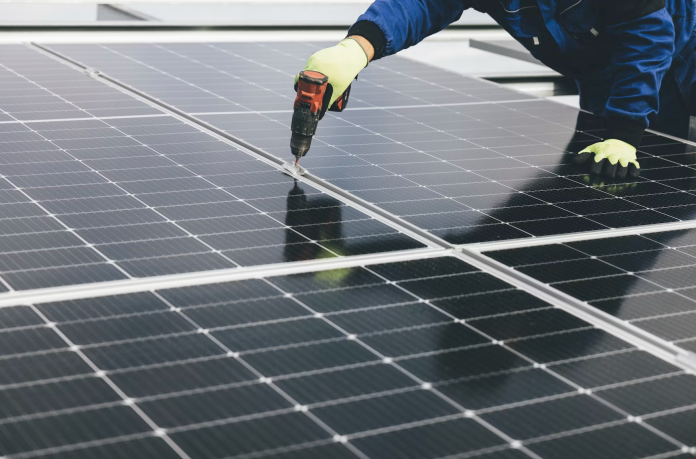
Photo by Markus Spiske

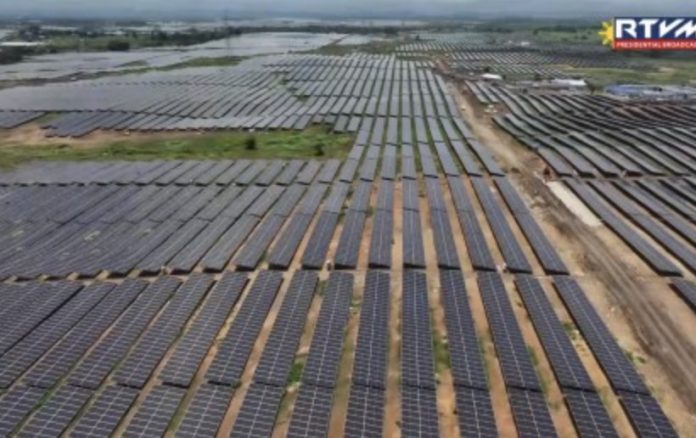
The Department of Energy (DOE) on Wednesday said a 3-megawatt-peak (MWp) solar power project supplying the Camarines Sur IV Electric Cooperative (CASURECO IV) has been energized, expanding renewable energy capacity and improving power reliability in Camarines Sur.

The ground-mounted solar facility, developed by Trademaster Renewable One Inc. under a Solar Energy Operating Contract awarded in July 2023, is connected directly to CASURECO IV’s distribution network in Tigaon, allowing electricity generated by the plant to be supplied to consumers within the cooperative’s franchise area.

Situated on a 2.42-hectare site, the project is expected to generate enough electricity to power around 1,900 households annually while reducing dependence on conventional generation and exposure to volatile imported fuel prices, according to the DOE.

Energy Secretary Sharon Garin said the project demonstrates how renewable energy investments can improve local electricity systems while delivering direct benefits to host communities.

“The CASURECO IV Solar Power Project demonstrates how renewable energy investments can strengthen local power reliability while ensuring that host communities directly benefit from the responsible development of their own resources,” Garin said in a statement.

Under the Energy Regulation Program No. 1-94, host communities will receive ₱0.03 for every kilowatt-hour of electricity generated and sold. Of the amount, ₱0.025 per kWh will support livelihood, social development and environmental programs, while ₱0.005 per kWh will be allocated for rural electrification.

Local governments may also use part of the funds to help reduce electricity rates for consumers.

The project is also expected to create employment opportunities through the hiring of local workers and the procurement of goods and services from businesses in host communities.

The energization comes as the government accelerates renewable energy deployment to reduce the country’s reliance on imported fossil fuels and strengthen energy security.

Earlier this month, President Ferdinand Marcos Jr. inaugurated the first phase of the MTerra Solar Project in Nueva Ecija, billed as the world’s largest operational integrated solar-and-battery facility on a single site, saying it would help shield the Philippines from global energy price shocks.

The DOE has also been advancing renewable energy in off-grid areas.

Last week, the Energy Regulatory Commission said it was drafting rules that would prioritize renewable energy-powered distributed energy resources over diesel generation in missionary areas, a move aimed at lowering electricity costs and reducing dependence on imported diesel.

The government aims to increase the share of renewable energy in the country’s power generation mix to 35% by 2030 and 50% by 2040 through the continued rollout of solar, wind, hydro and other clean energy projects.

Marcos says MTerra solar project to bolster Philippine energy security

0
MTerra Solar Project

President Ferdinand Marcos Jr. said on Tuesday the MTerra Solar Project would help protect the Philippines from global energy shocks by reducing its reliance on imported fossil fuels and expanding the role of renewable energy in the country’s power mix.

Marcos made the remarks at the inauguration of the project’s first phase in Nueva Ecija, according to the Philippine News Agency.

He said the facility would strengthen the country’s long-term energy security as global fuel markets remain exposed to geopolitical conflicts, including tensions in the Middle East that have driven up oil prices.

Coal accounted for 57% of the Philippines’ electricity generation in 2025, while renewable energy contributed about 25%, Marcos said.

“Such an energy mix leaves us more vulnerable to fluctuations in global fuel prices and developments in the international market,” he said.

The project was developed by Terra Solar Philippines Inc., an affiliate of Meralco PowerGen Corp., in partnership with global infrastructure investor Actis.

It spans five municipalities in the provinces of Nueva Ecija and Bulacan.

The first phase has installed 1,373 megawatts of solar photovoltaic capacity and 825 MW of battery energy storage.

The Department of Energy earlier said the National Grid Corporation of the Philippines had cleared an initial 750 MW for testing and commissioning, allowing power from the facility to begin flowing into the Luzon grid.

Marcos said the first phase was 91% complete and expected to begin full commercial operations in August. The second phase is targeted for completion in 2027.

Once fully operational, the project will have up to 3,500 MW of solar capacity and 4,500 megawatt-hours of battery storage, enough to supply about 2.4 million households.

The facility is also expected to create more than 10,000 jobs, cut carbon emissions by about 4.3 million metric tons annually and generate nearly 23 billion pesos ($403 million) in economic benefits over the next decade, Marcos said.

The President said the project was part of broader efforts to modernise the country’s energy sector and attract more investment in renewable power.

The energy department awarded 605 renewable energy service contracts from July 2022 to May 2026, while installed battery storage capacity increased to 845 MW from 93 MW over the same period, he said.

The government has also launched a 10-year Green Energy Auction Program aimed at adding 25 gigawatts of renewable energy capacity from 2027.

DOE Launches Native Hydrogen Survey in Pangasinan

0
Photo by David Becker on Unsplash.

The Department of Energy (DOE) has begun a seismic survey in Pangasinan to assess the country’s native hydrogen potential, marking a key step in efforts to develop a new indigenous low-carbon energy source that could support the country’s clean energy transition and strengthen long-term energy security.

Energy Secretary Sharon Garin led the launch of the 132.6-line-kilometre two-dimensional (2D) seismic survey in Bugallon, Pangasinan on July 10.

The survey is being undertaken by Koloma Inc., operator of Service Contract (SC) No. 84, with the support of the provincial governments of Pangasinan and Zambales.

The seismic campaign will generate detailed images of underground rock formations to identify geological structures that may contain naturally occurring, or native, hydrogen.

The results will guide succeeding exploration activities and improve understanding of the area’s subsurface geology, the DOE said.

The survey follows an aerial gravity and magnetic (AGM) survey completed by Koloma from March to early June this year, covering 27,976.5 line kilometres across the contract area. Processing of the AGM data is ongoing.

Before the survey launch, Garin conducted an aerial inspection of the Los Fuegos Eternos natural gas seep area, where geological sampling carried out in May produced promising preliminary indications of hydrogen gas, according to the DOE.

The department said the initial findings warrant further studies and exploration.

Native hydrogen, also known as geologic or white hydrogen, occurs naturally beneath the Earth’s surface, unlike conventional hydrogen that is produced through industrial processes.

If commercially viable deposits are confirmed, the resource could provide the Philippines with an additional domestic source of clean energy while reducing dependence on imported fuels.

Interest in native hydrogen has accelerated globally in recent years as governments and energy companies explore new low-carbon energy sources.

Unlike green hydrogen, which is produced using renewable electricity through electrolysis, native hydrogen exists naturally underground and may offer a lower-cost alternative if recoverable in commercial quantities.

The DOE said the seismic survey forms part of its broader strategy to evaluate the country’s native hydrogen resources and diversify indigenous energy sources.

Koloma is also conducting exploration under the adjacent Service Contract No. 83, which covers portions of Zambales.

To support the emerging industry, the DOE has integrated native hydrogen into the country’s existing petroleum service contract system, establishing a regulatory framework intended to encourage private investment while maintaining government oversight.

Under the Philippine service contract regime, all technical, operational and financial risks associated with exploration are borne entirely by the contractor, meaning no direct government funds are used for native hydrogen exploration, development or production.

Garin thanked Pangasinan Governor Ramon Guico III, Bugallon Mayor William Dy and local government officials for supporting the project, saying close coordination with host communities is essential to the successful implementation of exploration activities.

The native hydrogen initiative adds to a series of measures by the DOE to broaden the country’s clean energy portfolio beyond solar, wind, hydro and geothermal.

In recent months, the agency has advanced policies promoting renewable energy deployment in off-grid areas, launched reforms to prioritize renewable energy-based distributed energy resources over diesel generation, strengthened accountability in the development of renewable energy projects, and expanded support for battery energy storage systems as part of efforts to improve grid reliability and accelerate the country’s energy transition.

The department has also continued to encourage investments in emerging energy technologies alongside conventional renewables as the Philippines works toward increasing the share of clean energy in its power generation mix while enhancing energy security through the development of indigenous resources.

If successful, the exploration programme could position the Philippines among a growing number of countries evaluating naturally occurring hydrogen as part of their long-term energy transition strategies.

Security Bank refinances 17.4-MW Hermosa solar project

0

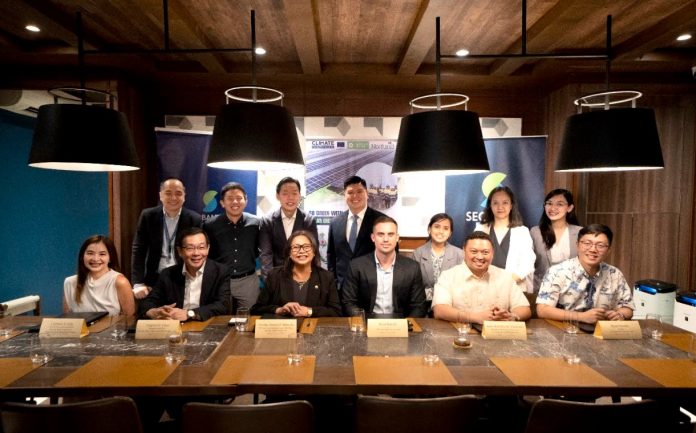
Security Bank Corp. has refinanced a 17.4-megawatt solar power project in Hermosa, Bataan, marking its first transaction with climate finance investors Climate Fund Managers and Norfund.

The bank acted as sole lender to Solana Solar Beta Inc., the developer of a solar facility supplying electricity to Peninsula Electric Cooperative Inc. under a 20-year power supply agreement.

The project is expected to generate about 35.5 gigawatt-hours of electricity annually and provide 10 MW of contracted capacity to PENELCO, according to Security Bank.

Solana Solar Beta is part of CN Green Roof Asia, a regional renewable energy platform developing rooftop and utility-scale solar projects across Southeast Asia.

Security Bank provided the refinancing facility, while Security Bank Capital Investment Corp. acted as arranger. The bank’s Trust and Asset Management Group served as facility agent and security trustee.

The loan agreement was signed on May 26, 2026, and the facility was disbursed on June 25.

The transaction is Security Bank’s first partnership with Climate Fund Managers, a blended climate finance investment manager, and Norfund, Norway’s development finance institution.

Security Bank Corporate Banking Group Head Yvonne Marcelo said the transaction would support additional renewable energy capacity in Bataan and expand the bank’s partnerships with international climate investors.

The solar plant is connected to PENELCO’s distribution system through an embedded connection, allowing electricity to be delivered directly within the cooperative’s service area.

PENELCO has peak demand of about 148 MW and supplies electricity to customers across several municipalities and barangays in Bataan.

Green Roof Asia is a joint venture between Climate Fund Managers’ EU-supported Climate Investor One Fund and Norfund.

The refinancing brings Security Bank’s renewable energy portfolio to 24 projects nationwide, representing a combined installed capacity of 4.30 gigawatts.

The bank said its wider sustainable finance portfolio had reached P116.95 billion in total disbursements as of May 2026.

The deal adds to a series of renewable energy investments reported in recent weeks, including financing for off-grid clean energy projects, new corporate renewable electricity supply agreements under the Green Energy Option Program, and regulatory reforms aimed at accelerating renewable energy deployment across the country.

ERC drafts rules to prioritize renewable energy in off-grid power systems

0
Photo by Karsten Würth on Unsplash

The Energy Regulatory Commission (ERC) is drafting rules that would require renewable energy to be dispatched ahead of diesel-fired power plants in off-grid areas, as the regulator seeks to lower electricity costs and reduce dependence on imported fuel.

ERC Chairperson and Chief Executive Officer Francis Saturnino Juan said the proposed rules on off-grid Distributed Energy Resources (DER) would establish an operational and financial framework that gives renewable energy sources priority in dispatch over diesel generation.

“At the heart of these reforms is a simple objective: to deliver more affordable, reliable, and sustainable power to our off-grid communities while easing the burden on all electricity consumers who bear the Universal Charge for Missionary Electrification (UC-ME),” Juan said during a media briefing on Thursday.

Under the draft rules, DER owners would receive 80% of the Subsidized Approved Generation Rate (SAGR), while distribution utilities would receive the remaining 20% to support grid maintenance and upgrades.

Renewable energy developers would also be eligible for incentives, including a cash incentive equivalent to 50% of the UC-ME rate for every kilowatt-hour generated, while earning Renewable Energy Certificates that can be used to meet renewable energy compliance requirements.

The proposed compensation mechanism and incentives are expected to improve the commercial viability of renewable energy projects in off-grid areas, where diesel-fired generation has traditionally dominated electricity supply because of limited or no connection to the main transmission grid.

Many of the Philippines’ off-grid communities rely on diesel generation operated by the National Power Corporation and private power providers, with operating costs subsidized through the UC-ME, a levy collected from electricity consumers nationwide.

The proposal builds on a series of government initiatives aimed at accelerating renewable energy deployment in remote communities.

Earlier this month, the Department of Energy (DOE) said it was developing a pipeline of projects to reduce diesel consumption in off-grid areas, including support for microgrids and other clean energy solutions.

The ERC’s proposed rules also complement recent efforts to strengthen the country’s renewable energy framework.

The commission recently adopted rules on off-grid transmission wheeling, while the DOE has been pushing policies covering zero-export solar systems, battery energy storage deployment and renewable energy auctions to expand clean energy capacity and improve grid reliability.

The government has also been accelerating the completion of new power projects through Task Force 200, which the DOE said has delivered about 1.5 gigawatts of additional capacity this year, including battery energy storage systems that can help integrate more renewable energy into the grid.

The ERC said it will publish the draft rules on July 10, accept public comments until July 23, and hold a virtual public consultation on July 30.

The proposed framework is expected to encourage greater private sector investment in distributed renewable energy systems while helping reduce fuel costs and improve energy security in island and remote communities.

Philippines approves P10.07bn geothermal risk facility to spur private renewable energy investment

0
Photo by Yunan Wang on Unsplash.

The Philippine government has approved a P10.07-billion geothermal risk-sharing facility to encourage private investment in renewable energy by helping developers manage the high costs and uncertainty of geothermal exploration.

The Economy and Development Council (EDC), chaired by President Ferdinand Marcos Jr., approved the Philippine Geothermal Resource Derisking Facility during its 10th meeting on Tuesday.

The facility is designed to absorb part of the financial risks associated with early-stage geothermal exploration, one of the biggest hurdles to developing new geothermal projects.

The council said the mechanism is expected to encourage more developers to pursue geothermal exploration by reducing the financial exposure associated with drilling and resource assessment, helping strengthen the country’s pipeline of clean energy investments.

Geothermal projects require substantial upfront spending on exploration drilling before developers can determine whether a resource is commercially viable. The uncertainty has historically made financing difficult despite geothermal’s ability to provide round-the-clock renewable electricity, unlike intermittent sources such as solar and wind.

The approval builds on work launched in 2022, when the Department of Energy (DOE) partnered with the Asian Development Bank to develop a geothermal de-risking roadmap aimed at reducing pre-development risks and identifying policy and regulatory reforms needed to accelerate investment in the sector.

The DOE has previously said geothermal developments typically require four to six years before reaching commercial operations because of the extensive exploration, drilling and development work involved.

Under the proposed mechanism, funding provided for successful exploration projects would be treated as a loan, while support for unsuccessful exploration could be converted into a grant, reducing developers’ exposure to exploration risks.

The latest initiative adds to a series of government measures aimed at accelerating the country’s clean energy transition.

In recent months, RenewableEnergy.ph reported that the DOE created a task force to develop a carbon credit framework for the energy sector, issued new rules to facilitate privately funded transmission facilities, and continued promoting the Green Energy Option Program and Retail Aggregation Program to expand consumer access to renewable electricity.

The government has also been pushing forward with utility-scale solar, offshore wind and floating solar developments while seeking to strengthen investment conditions across the renewable energy sector.

The de-risking facility also complements the government’s efforts to streamline project approvals. Earlier this year, the Board of Investments granted Green Lane certification to 13 strategic renewable energy projects worth more than P344 billion, allowing them to benefit from expedited permitting and inter-agency coordination.

Energy Secretary Sharon Garin previously said the proposed facility would help strengthen the country’s indigenous energy supply while supporting efforts to restore the Philippines’ position as one of the world’s leading geothermal producers.

The Philippines is the world’s third-largest producer of geothermal energy after the United States and Indonesia, with geothermal plants supplying stable baseload electricity to the national grid.

The government aims to increase renewable energy’s share of the country’s power generation mix to 35% by 2030 and 50% by 2040, while expanding installed renewable energy capacity to 52 gigawatts by 2040.

Officials see geothermal as a critical component of the country’s energy transition because of its ability to provide reliable, around-the-clock power while reducing dependence on imported fossil fuels.

Basic Energy, AC Mobility open first EV charging stations, advance nationwide rollout

0
Basic Energy AC Mobility
Photo by michael Fousert on Unsplash.

Basic Energy Corp. has begun commercial operations of its first two electric vehicle (EV) charging stations in partnership with AC Mobility, marking an early milestone in a nationwide rollout as the listed renewable energy developer expands beyond power generation into clean transport infrastructure.

The charging stations, developed through Basic Energy Renewables Corp. (BERC), the company’s wholly owned renewable energy subsidiary, are located at a Total service station along the North Luzon Expressway (NLEX) and an Eco Oil service station in Alabang, Muntinlupa City, the company said in a disclosure.

Each site is equipped with one 120-kilowatt direct current (DC) fast charger and one 22-kW alternating current (AC) charger, and is now open to the public.

The rollout is set to accelerate, with two more charging stations under construction at Total Sumulong and EcoOil Cainta. Basic Energy said another 16 sites are in the design and costing stage, 20 are undergoing site surveys, and at least 51 prospective locations are being assessed for future development.

The project forms part of Basic Energy’s strategy to diversify its renewable energy business and participate in the Philippines’ growing EV ecosystem.

The company has been expanding its clean energy portfolio in recent years, pursuing solar, wind and other renewable energy projects while seeking opportunities in emerging low-carbon technologies.

For AC Mobility, the venture supports its goal of building one of the country’s largest and most accessible EV charging networks.

The Ayala Group’s mobility platform has been rapidly expanding charging infrastructure at commercial establishments, transport corridors and mixed-use developments to help address one of the biggest barriers to electric vehicle adoption.

The latest deployment comes as the Philippines pushes to accelerate transport electrification under the Electric Vehicle Industry Development Act (EVIDA), which seeks to develop charging infrastructure and encourage wider adoption of electric vehicles as part of the country’s decarbonization efforts.

Basic Energy said the initiative aligns with its objective to expand its renewable energy portfolio while contributing to the development of the Philippine EV ecosystem.

The rollout also complements the country’s broader energy transition, as renewable electricity and EV charging infrastructure increasingly develop in tandem to reduce carbon emissions from the transport sector.

ACEN to sell up to 49% stake in 100-MW India wind project

0
ACEN
Photo by Usha Kiran on Unsplash.

ACEN Corp. has agreed to sell up to a 49% stake in a 100-megawatt wind power project in India, continuing its strategy of partnering with investors to fund renewable energy developments while expanding its presence in one of Asia’s fastest-growing clean energy markets.

In a disclosure to the Philippine Stock Exchange, the Ayala-led energy company said its subsidiary, Unlimited Renewables Holdings B.V. (URH), signed a securities sale and purchase agreement on July 3 with Diamond India Renewables One B.V. (DIRO) for the acquisition of up to 49% of Diyos Renewables India Project Private Ltd.

The parties also signed a shareholders’ agreement involving URH, UPC Renewables India Management Private Ltd., UPC APAC Holdings Pte. Ltd. and DIRO.

The transaction is expected to close in stages, with DIRO initially acquiring a 10% voting interest in Diyos. Financial terms of the deal were not disclosed.

Diyos is developing and constructing a 100-MW utility-scale wind project in Karnataka, southern India. The closing of the transaction remains subject to customary conditions precedent and other contractual requirements.

The divestment comes about three months after ACEN secured a 7.517 billion rupee (about P4.78 billion) project finance loan for the same project through Diyos Renewables India Project Private Ltd.

The financing, arranged by Mitsubishi UFJ Financial Group and Sumitomo Mitsui Banking Corporation, will fund the first phase of the Bijapur Wind project, which is expected to begin operations in 2027.

The wind farm will supply electricity under a long-term power purchase agreement with SJVN Ltd., a state-owned enterprise under India’s Ministry of Power.

Once operational, the facility is expected to generate around 330 million kilowatt-hours of clean electricity annually, avoiding approximately 300,000 tonnes of carbon dioxide emissions each year.

The latest transaction is in line with ACEN’s strategy of recycling capital by bringing in strategic partners while retaining an interest in operating renewable energy assets.

The company has increasingly used the approach to support its regional expansion and fund new clean energy developments.

India has become a key growth market for ACEN as the country targets 500 gigawatts of renewable energy capacity by 2030.

Earlier this year, the company also consolidated full ownership of a 1,069-megawatt direct current renewable energy portfolio in Rajasthan and Karnataka following the restructuring of its joint venture with UPC Renewables.

ACEN is targeting 20 GW of attributable renewable energy capacity by 2030, with India serving as one of its core international markets alongside the Philippines, Australia, and Vietnam.

The company currently has renewable energy projects spanning solar, wind and battery storage across the country.

Federal Land powers four Met Park residential projects with 100% RE through ACEN RES

0
Federal Land
Photo by Markus Spiske on Unsplash.

Federal Land Inc. has shifted four residential developments in its Met Park township in Pasay City to 100% renewable energy under a multi-year supply agreement with ACEN Renewable Energy Solutions (ACEN RES), marking another step in the growing adoption of clean electricity by Philippine property developers.

The transition covers Six Senses Residences, Mi Casa, Palm Beach Villas, and Palm Beach West, with renewable electricity supplied by ACEN RES, the retail electricity arm of Ayala-led ACEN.

The move is enabled through the government’s Green Energy Option Program (GEOP) and Retail Aggregation Program (RAP), two initiatives designed to expand consumer access to renewable energy while accelerating the country’s transition to cleaner power sources.

Under GEOP, electricity end-users with a minimum monthly demand of 100 kilowatts can procure electricity directly from licensed renewable energy suppliers. RAP, meanwhile, allows multiple facilities to aggregate their electricity demand, enabling more buildings and developments to qualify for retail renewable electricity supply.

The latest agreement comes as more Philippine businesses are turning to GEOP and RAP to meet sustainability goals and manage long-term electricity costs, amid the government’s broader push to increase the share of renewable energy in the country’s power generation mix.

“This partnership with Federal Land demonstrates how renewable energy can be integrated into large-scale residential developments,” said Tony Valdez, senior vice president for market transformation and retail at ACEN.

“By transitioning these properties to our renewable energy portfolio, we are helping Federal Land enhance the long-term value and resilience of its developments while advancing its sustainability ambitions. This collaboration also highlights our ability to deliver tailored energy solutions for the real estate sector,” he added.

The transition was implemented through the collaboration of Federal Property Management Corporation, the property management arm of Federal Land, and the condominium corporations of the participating developments.

Federal Land said sourcing 100% renewable electricity is expected to strengthen the long-term value of the developments by improving energy resilience, reducing exposure to electricity market volatility, and creating a more sustainable and future-ready living environment for residents.

The agreement adds to a series of renewable energy initiatives across the country’s real estate sector as developers incorporate clean power into residential, commercial and mixed-use projects in response to investor demand, tenant preferences and the Philippines’ energy transition agenda.

The shift also complements recent government efforts to accelerate renewable energy deployment.

In recent weeks, the Department of Energy has continued to promote policies supporting the sector, including wider participation in renewable energy procurement and measures aimed at attracting more investment into clean energy projects.

These initiatives form part of the country’s goal of increasing renewable energy’s share in the power generation mix while improving energy security.

ACEN RES is the retail electricity business of ACEN, the Ayala group’s listed energy company. ACEN has more than 7 gigawatts of attributable renewable energy capacity across projects in operation, under construction and under signed agreements in the Philippines, Australia, Vietnam, India, Laos, Indonesia and other markets.

The company aims to achieve net-zero greenhouse gas emissions by 2050.

Philippines, Finland explore renewable energy workforce cooperation

0

The Philippines and Finland are exploring cooperation to develop a skilled workforce for the renewable energy sector as part of broader efforts to prepare Filipino workers for the transition to a greener economy, the Department of Labor and Employment (DOLE) said on Thursday.

During a courtesy call, Finnish Ambassador Saija Nurminen and Labor Secretary Francis Tolentino discussed potential collaboration in renewable energy, alongside maritime technology, artificial intelligence, and other emerging industries expected to generate employment in the coming years, DOLE said.

The two countries also explored scholarship, training and exchange programs aimed at equipping Filipino workers with skills needed in these sectors while giving trainers and students access to Finland’s vocational education system.

Tolentino highlighted the Philippines’ efforts to build a workforce for the green economy through the Philippine Green Jobs Act and the Technical Education and Skills Development Authority’s Green TVET program. He also cited renewable energy, waste management and other sustainable industries as areas for deeper cooperation with Finland.

DOLE said it is interested in learning from Finland’s labor migration model, which matches skilled foreign workers with employers while promoting ethical recruitment, streamlined processing and stronger worker protection.

The department also thanked Finland for supporting the ongoing Philippines-European Union Free Trade Agreement negotiations, where DOLE leads discussions on labor provisions covering decent work and workers’ rights.

From 2024 to April 2026, the Philippines deployed 1,299 newly hired overseas Filipino workers to Finland, mainly in healthcare, hospitality and skilled trades. Finland is home to about 12,770 Filipinos, while 39 Finnish companies operate in the Philippines across various industries.