

Home Blog Page 2

GSIS raises stake in Citicore Renewable Energy to 7.48%

0
REPower Matabas
Photo by Zbynek Burival on Unsplash.

State-run Government Service Insurance System (GSIS) has increased its stake in Citicore Renewable Energy Corp. (CREC) to 7.48% after acquiring additional shares from Megawide Construction Corp., according to a regulatory filing with the Philippine Stock Exchange.

GSIS purchased 287.45 million CREC common shares from Megawide on June 25, bringing its total holdings to 834.33 million shares, equivalent to 7.48% of the company’s outstanding shares.

The latest acquisition raised GSIS’s stake above the 5% ownership threshold that requires shareholders to disclose substantial ownership under Philippine securities regulations.

The purchase follows GSIS’s acquisition of 320 million CREC shares from Megawide on May 8 and another 226.88 million shares on May 12, as the state pension fund steadily expanded its investment in the listed renewable energy developer.

The investment comes as CREC accelerates the rollout of new renewable energy projects across the Philippines.

The company recently energized solar power facilities in Pangasinan and Negros Occidental, raising its gross renewable energy capacity to 791 megawatt-peak (MWp). It aims to build 5 gigawatts of renewable energy capacity within five years and plans to energize additional solar projects in Pangasinan, Batangas and Quezon in the coming quarters as testing and commissioning activities continue.

“These recent energizations form part of our delivery of Green Energy Auction projects,” CREC President and Chief Executive Officer Oliver Tan said in an earlier statement.

CREC’s expansion forms part of its participation in the government’s Green Energy Auction Program, which seeks to accelerate the deployment of renewable energy projects to support the country’s transition to cleaner sources of power.

AboitizPower starts construction of 60-MW battery storage project in Cebu

0
AboitizPower
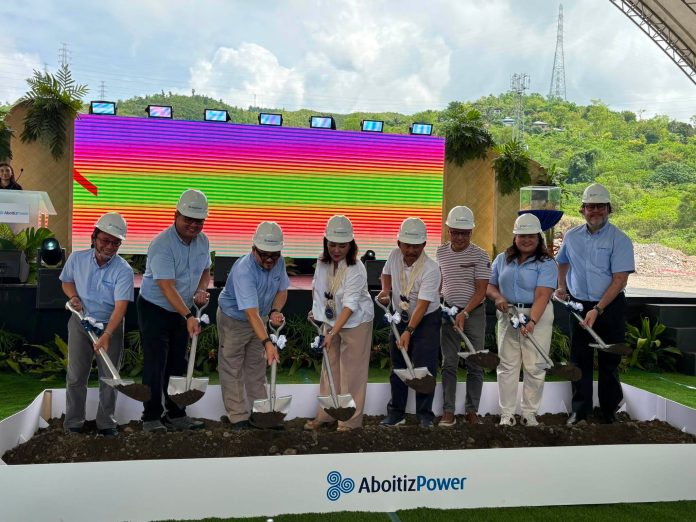
Left to Right- - AboitizPower Transition Business Group SVP for Project Development and Execution Voltaire Cruz - TBG Chief Operating Officer Aldo Ramos - AboitizPower Transition Business Group President Celso Caballero III - Cebu Governor Pamela Baricuatro - DOE Undersecretary Mario Marasigan - City of Naga Mayor Valdemar Chiong -AboitizPower Transition Business Group Regional COO for Visayas Rhea Navarro - AboitizPower Distribution Business Group Senior Vice President and COO Anton Perdices

Aboitiz Power Corp. has started construction of a 60-megawatt (MW) battery energy storage system (BESS) in Cebu, converting a former thermal power plant into an energy storage facility as the Philippines expands infrastructure to support a growing share of renewable energy.

The standalone BESS will be built within the Naga Power Plant Complex in Barangay Colon, Naga City, Cebu. Scheduled to begin commercial operations in 2027, the facility will provide contingency and regulating reserve services to help the Visayas grid respond more quickly to fluctuations in electricity supply and demand.

The project marks the transformation of the Naga Power Plant Complex from thermal power generation to energy storage. The site’s legacy coal- and diesel-fired generating units have been decommissioned and demolished after AboitizPower acquired the facility from the National Power Corporation in 2018 through the government’s privatization program.

Battery energy storage systems are becoming increasingly important as more solar and wind capacity is connected to the grid, providing fast-response reserves that help maintain grid stability and improve the reliability of electricity supply.

“Naga BESS represents transformation in action. It reflects our efforts to strengthen the energy system by investing in people, infrastructure, and technology to enhance flexibility, resilience, and reliability of the grid,” said Celso C. Caballero III, president of AboitizPower’s Transition Business Group.

Speaking at the groundbreaking ceremony, Energy Undersecretary Mario Marasigan said battery storage projects play a critical role in supporting the country’s renewable energy ambitions.

“While we continue to promote investments in renewable energy technologies, we also need this technological support to create a reliable and efficient system,” Marasigan said.

The Naga BESS forms part of AboitizPower’s strategy to maintain a balanced energy portfolio while supporting the Philippine Energy Plan. The company said the project will help strengthen grid reliability in the Visayas, where electricity demand continues to grow alongside the expansion of renewable energy capacity.

Commercial operations are targeted to begin in 2027.

Philippines to host World Nuclear Supply Chain Conference 2026 in Manila

0

The Philippines will host the World Nuclear Supply Chain Conference 2026 and the Philippine International Nuclear Supply Chain Forum 2026 on October 20-21 after the Department of Energy (DOE) and the World Nuclear Association agreed to combine the two events into a single conference in Manila.

The integrated event, to be held at the Grand Hyatt Manila in Taguig City, is expected to bring together policymakers, regulators, utilities, reactor developers, engineering and construction firms, manufacturers, suppliers, financiers, research organisations and international institutions to discuss the future of nuclear energy supply chains and industrial cooperation across Southeast Asia.

Held during the Philippines’ chairmanship of the Association of Southeast Asian Nations (ASEAN), the conference is expected to serve as a platform for aligning government policy with industry needs, while promoting investment, localisation strategies, workforce development and supply chain readiness as countries in the region explore nuclear energy to strengthen energy security and reduce carbon emissions.

Although nuclear power is not classified as a renewable energy source, it is widely recognised as a low-carbon electricity technology and is increasingly being considered alongside renewable energy as countries pursue net-zero emissions, energy diversification and reliable baseload power generation.

“The expansion of nuclear energy will be delivered through strong regional partnerships and resilient global supply chains,” World Nuclear Association Director General Sama Bilbao y León said in a statement.

“By partnering with the Philippines Department of Energy, we are creating a single platform that brings international expertise together with ASEAN’s priorities for industrial development, clean energy and energy security. This partnership will help turn ambition into practical collaboration across the full nuclear value chain.”

Energy Secretary Sharon S. Garin said the partnership reflects the Philippines’ commitment to fostering regional cooperation as ASEAN countries evaluate nuclear energy to meet rising electricity demand.

“The Philippines is pleased to partner with World Nuclear Association to convene this integrated event in Manila,” Garin said.

“As ASEAN countries explore sustainable pathways to meet growing energy demand, cooperation on policy, skills, investment and supply chain capability will be essential. This forum will support constructive dialogue and practical partnerships that can help unlock opportunities for nuclear energy development in the Philippines, across ASEAN and beyond.”

The conference programme will focus on the practical requirements of developing nuclear programmes, including industrial readiness, vendor development, project delivery, financing, localisation strategies and ASEAN supply chain integration.

Dedicated business-to-business networking sessions are also expected to connect international suppliers with regional manufacturers, contractors and service providers.

The conference comes as the Philippines continues laying the groundwork for a potential nuclear energy programme through policy development, regulatory capacity building, workforce training and international cooperation.

The government has also been exploring both conventional nuclear technologies and small modular reactors as part of its long-term strategy to diversify the country’s energy mix.

According to the World Nuclear Association, the 2025 World Nuclear Supply Chain Conference in Poland attracted 310 delegates representing 196 companies from 27 countries, highlighting growing international collaboration as the industry prepares for significant expansion in new nuclear capacity, plant life extension projects and fuel cycle activities.

The association’s latest World Nuclear Outlook projects global nuclear generating capacity could reach 1,446 gigawatts by 2050, with around 50 countries expected to have nuclear power in operation by then.

It added that ASEAN accounts for nearly one-quarter of projected nuclear capacity among newcomer countries as governments in the region assess nuclear energy as part of long-term strategies for energy security, industrial development and decarbonisation.

The integrated conference is expected to strengthen the Philippines’ position as an emerging participant in the global nuclear industry while creating opportunities for local manufacturers, engineering firms and service providers to engage with international suppliers, technology developers and investors as the country advances preparations for future nuclear energy development.

DOE to issue show cause orders to 175 generation companies over reporting failures

0

The Department of Energy (DOE) will issue show cause orders to 175 generation companies for failing to comply with mandatory reporting requirements under its power sector accountability framework, as it tightens oversight to improve electricity supply reliability.

The companies failed to submit their annual self-assessment reports required under Department Circular No. DC2026-02-0006, or the Policy on Accountability of Entities Engaged in Power Generation to Ensure Sufficient, Reliable, Affordable, and Secure Supply of Energy in the Country, despite an extension of the submission deadline to April 24.

The non-compliant entities include 164 on-grid generation companies and 11 off-grid generation companies covering 37 generating facilities, according to the DOE.

The annual self-assessment is intended to help the department monitor the operational readiness, technical performance and contractual compliance of generation facilities, allowing regulators to identify potential deficiencies before they develop into power supply disruptions.

The DOE said companies that failed to submit the required reports would be required to explain their non-compliance and justify why administrative sanctions authorized under existing laws and regulations should not be imposed.

The department said failure to submit the reports hampers its ability to assess the operational condition of generation facilities and detect issues that could lead to forced outages, prolonged capacity deratings and failure to deliver contracted generation capacity, all of which could threaten the stability of the country’s electricity supply.

“The Department’s responsibility goes beyond ensuring compliance with our policies. More importantly, it is to ensure that every generation company entrusted with supplying electricity remains accountable to the Filipino people,” Energy Secretary Sharon Garin said.

“Reliable electricity begins with responsible operations. Generation companies must not only comply with regulatory requirements but must also demonstrate that they are capable of delivering the power they have committed to provide,” she added.

The accountability policy, issued on Feb. 19, establishes operational, technical, contractual and reporting obligations for power generation companies as part of the government’s efforts to strengthen the reliability and performance of the Philippine power sector.

The DOE said the enforcement action comes amid continued monitoring of recurring operational deficiencies at some generating facilities, including repeated forced outages, prolonged capacity deratings and failures to deliver contracted generation capacity that have contributed to supply disruptions in several parts of the country.

The accountability framework applies to both conventional and renewable energy generation companies operating in the Philippine power system. The DOE, however, did not identify the companies that would receive the show cause orders.

The department said it would continue strengthening oversight of the power generation sector through stricter enforcement, proactive monitoring and closer coordination with industry stakeholders to reduce forced outages, improve generator performance and help ensure a sufficient, reliable, affordable and secure electricity supply for consumers.

LANDBANK backs Palawan renewable microgrids with ₱800-million financing

0
(Photo) LANDBANK President and CEO Lynette V. Ortiz (center right) and WEnergy Global CEO Atem S. Ramsundersingh (center left), together with partners, Archipelago Renewables Corporation President Quintin Jose V. Pastrana (3rd from left), Maharlika Clean Power Holdings Corporation Treasurer Jose Antonio Gozun (2nd from left), LANDBANK EVP Charlotte I. Conde (3rd from right), and FVP Ann Marijell B. Ong (2nd from right), formalize an ₱800-million financing agreement to deploy hybrid renewable energy-powered microgrids in underserved communities in Palawan. Also present as witnesses are H.E. Ambassador of the Netherlands Marielle Geraedts (leftmost) and Department of Energy (DOE) Undersecretary Rowena Cristina L. Guevara (rightmost).

State-owned Land Bank of the Philippines (LANDBANK) has approved an ₱800-million financing facility for Archipelago Renewables Corporation (ARC) to deploy hybrid renewable energy microgrids across underserved communities in Palawan, expanding electricity access through solar-powered systems with battery storage.

The financing will support the construction of 16 off-grid microgrids and 175 kilometers of distribution lines serving 14 barangays within the Palawan Electric Cooperative (PALECO) franchise area. The hybrid systems, which combine solar photovoltaic (PV) panels, battery energy storage systems (BESS) and diesel backup generation, are expected to provide 24-hour electricity to about 7,100 households, more than 300 small businesses, and key community facilities, benefiting over 30,000 residents.

The financing agreement was formalized on June 22 at LANDBANK Plaza in Manila in the presence of Department of Energy Undersecretary Rowena Cristina Guevara and Netherlands Ambassador Marielle Geraedts.

“This initiative goes beyond building infrastructure; it powers opportunity,” LANDBANK President and Chief Executive Officer Lynette Ortiz said.

“By combining clean solar energy with innovative financing, we are strengthening communities, supporting local enterprises, and accelerating inclusive growth in underserved areas. This is how we move forward—sustainably and responsibly,” she added.

ARC was established to develop and operate renewable and hybrid energy systems in off-grid communities. It is backed by Maharlika Clean Power Holdings Corporation, CleanGrid Partners Pte. Ltd., and Singapore-based WEnergy Global Pte. Ltd., bringing together expertise in renewable energy technology, project development and infrastructure investment.

WEnergy Global Chief Executive Officer Atem Ramsundersingh said the financing would help expand reliable electricity access while creating economic opportunities in remote communities.

“This partnership is about turning finance into economic and social impact,” Ramsundersingh said.

ARC President Quintin Jose Pastrana said the project forms part of what the company described as the country’s largest private-sector venture in off-grid electrification, with projects planned not only in Palawan but also in Quezon and Cebu.

The initiative has been recognized as an energy project of national significance and supports broader efforts to expand electrification in underserved areas while reducing dependence on fossil fuel-based power generation.

Hybrid renewable energy microgrids, which integrate solar generation with battery storage and backup diesel systems, are increasingly being deployed across the Philippines as a cost-effective solution for geographically isolated and disadvantaged areas where extending the main transmission grid remains technically challenging and expensive.

The Department of Energy has identified microgrids as a key component of its strategy to achieve universal electrification while improving energy security and increasing the use of renewable energy in off-grid communities.

The Palawan project is part of a growing pipeline of hybrid renewable energy microgrids being developed across the country as the government seeks to reduce reliance on diesel generation and deliver cleaner, more reliable electricity to remote island communities.

AboitizPower inaugurates 92-MWp Pangasinan solar plant, expanding renewable portfolio

0
Aboitiz Renewables
Photo by Andres Siimon on Unsplash.

AboitizPower Corp.‘s renewable energy unit inaugurated its 92-megawatt-peak (MWp) San Manuel Solar Power Plant in Pangasinan, expanding its solar portfolio as the Philippines steps up efforts to increase the share of renewable energy in its electricity mix.

Located in Barangay San Roque, San Manuel, the facility is the third solar power plant operated by Aboitiz Renewables Inc. in Pangasinan, following its existing projects in Bugallon and Aguilar. The company said the province’s strong solar resources and available grid infrastructure made it an ideal location for further investment.

“Pangasinan’s strong solar potential and available grid connections have made it an ideal location for this project, and we are proud to expand our presence in a province that continues to play an important role in the country’s renewable energy future,” AboitizPower President and Chief Executive Officer Daniel Aboitiz said during the inauguration.

The 102-hectare solar farm is designed to generate around 146 gigawatt-hours (GWh) of electricity annually, enough to supply approximately 75,000 households with clean energy, according to Aboitiz Renewables Chief Development and Execution Officer Sean Chen.

The facility is equipped with more than 150,000 solar panels and is connected to the national grid through a 69-kilovolt substation and a 7.4-kilometer double-circuit transmission line linked directly to the National Grid Corporation of the Philippines’ San Manuel substation.

Chen said the project site was carefully selected to utilize land with limited agricultural use, allowing the company to pursue renewable energy development while minimizing the impact on local farming communities.

Construction of the solar project began in September 2024 and generated employment for about 1,190 workers, many of them from nearby communities.

Daniel Aboitiz said investments in renewable energy projects such as the San Manuel solar plant are essential to strengthening the country’s long-term energy security.

“Power generation investments like the San Manuel Solar Power Plant diversify our energy mix and support the Philippines’ long-term goals of energy security and energy autonomy,” he said.

Department of Energy Secretary Sharon Garin, who attended the inauguration, said Pangasinan has emerged as one of the country’s leading hubs for solar energy development.

She said renewable energy currently accounts for about 25% of the Philippines’ power generation mix as the government works toward increasing the share to 30% by 2030.

“Pangasinan has been very supportive of the energy transition as mandated by the President. A lot of people will be helped by your province, especially in energy,” Garin said.

The San Manuel project forms part of AboitizPower’s broader push to expand its renewable energy portfolio as demand for cleaner electricity continues to grow. The company has been increasing investments in solar, hydro, geothermal and other renewable technologies to support the country’s energy transition and improve long-term energy security.

The inauguration also reinforces Pangasinan’s position as one of the Philippines’ key locations for utility-scale solar development, with several large-scale projects already operating or under development in the province.

World Bank approves $1.02 billion financing for Philippines’ clean energy transition

0

The World Bank has approved a $1.02 billion financing package to help the Philippines accelerate its renewable energy transition, expand domestic power generation and reduce its dependence on imported fossil fuels, the multilateral lender said.

The package comprises a $1 billion loan from the International Bank for Reconstruction and Development (IBRD) and a $20 million performance-based grant from the Livable Planet Fund.

The World Bank said it is among the largest IBRD operations approved in support of the Philippines’ development agenda.

The financing, under the Second Energy Transition and Climate Resilience Development Policy Loan, will support a series of policy reforms aimed at lowering electricity costs, improving energy security and attracting private investment into the country’s clean energy sector.

Among the key measures backed by the program are the full operationalization of the Renewable Energy Market, the integration of electric vehicle charging infrastructure into utility planning, and the launch of the Philippines’ first offshore wind auction, which targets contracting 3.3 gigawatts (GW) of capacity by 2030.

The World Bank said the reforms are expected to mobilize about $7 billion in private investment while expanding the country’s domestic renewable energy capacity and creating new jobs.

“The Philippines has everything it needs to power itself at lower cost—wind along its coasts, sunlight year-round, and geothermal energy beneath its soil,” World Bank Division Director for the Philippines Zafer Mustafaoglu said in a statement.

“This operation helps turn those natural advantages into reliable, affordable electricity for Filipino families and businesses. At a time when global energy markets are deeply volatile, this development policy loan helps the Philippines take control of its own energy future, support growth, and create jobs,” he said.

The lender said persistently high and volatile electricity prices continue to weigh on Philippine households, businesses and economic competitiveness.

By reducing reliance on imported fossil fuels and accelerating investment in locally available renewable energy resources, the reforms are expected to shield the country from global fuel price swings and improve long-term energy affordability.

The Philippines aims to increase the share of renewable energy in its installed power generation capacity to 42% by 2027 from around 30% currently, as part of its strategy to diversify the energy mix and strengthen energy security.

Beyond energy, the financing package also supports reforms in the country’s fragmented water sector, where more than 1,600 local government units are responsible for water service delivery but often face financial and institutional constraints.

The program will back the implementation of cost-recovery tariff frameworks, a unified financing system prioritizing poor and climate-vulnerable communities, and bulk water pricing regulations.

These reforms aim to increase the number of local water service providers operating under sustainable business plans from 10 to 100 by 2027, improving water security nationwide.

The World Bank said the combined energy and water reforms are intended to strengthen the Philippines’ climate resilience while encouraging greater private sector participation in infrastructure development.

A Brown unit secures DOE authority for Bukidnon solar project

0
A Brown Company
Photo by Markus Spiske on Unsplash.

A Brown Company Inc. has secured the Department of Energy’s approval to begin pre-development work for a proposed solar power project in Bukidnon, marking another step in the listed firm’s push to expand its renewable energy portfolio.

In a disclosure to the Philippine Stock Exchange, A Brown said its indirect wholly owned subsidiary, Manolo Fortich Power Corp. (MFPC), received notice on June 26 that the DOE had issued Certificate of Authority (COA) No. SCOA2026-06-202 for the Manolo Fortich Solar Power Project. The certificate took effect on June 25.

The COA grants MFPC the exclusive authority to undertake pre-development activities for the proposed project, including securing permits and clearances from government agencies, local government units and other entities with jurisdiction over the site.

It also authorizes the company to conduct reconnaissance, feasibility studies and other assessments needed before the project can proceed to the next stage of development.

The proposed solar project will cover 202.38 hectares in the municipality of Manolo Fortich in Bukidnon.

Under DOE rules, a Certificate of Authority is an early milestone in the solar project development process. It enables developers to assess the technical, environmental and commercial viability of a project before applying for a Solar Energy Operating Contract (SEOC), which authorizes the development and operation of a solar energy facility.

A Brown said the certificate will remain valid for one year from its issuance. During this period, MFPC will complete the studies and regulatory requirements necessary to transition the project into an SEOC with the DOE.

MFPC is an indirect wholly owned subsidiary of A Brown through ABC Energy Inc., the company’s renewable energy arm.

The company said the Manolo Fortich Solar Power Project forms part of its broader renewable energy development strategy as it expands its presence in the country’s clean energy sector.

The disclosure did not provide details on the project’s planned generating capacity, estimated investment cost, construction timeline or target commercial operation date.

The project adds to a growing pipeline of solar developments being pursued across the Philippines as developers seek to capitalize on rising electricity demand and the government’s push to increase the share of renewable energy in the country’s power generation mix.

Repower forms subsidiary to pursue hydropower projects

0
Repower
Photo by Diwei Zhu on Unsplash.

Repower Energy Development Corp. (REDC) has approved the incorporation of a wholly owned subsidiary that will pursue hydropower projects, expanding the company’s renewable energy portfolio.

In a disclosure, REDC said its board approved the incorporation of Iba Hydropower Corp. and authorized the subscription to 12.5 million shares at a par value of P1 per share, representing an initial investment of P12.5 million.

The company said Iba Hydropower Corp. will be wholly owned by REDC and will engage in the operation of hydropower projects in line with the parent’s existing renewable energy business.

The subscription will be paid in cash and held in trust by the treasurer-in-trust pending approval of the subsidiary’s registration by the Securities and Exchange Commission.

The transaction is subject to the SEC’s approval of Iba Hydropower Corp.’s incorporation.

REDC did not disclose details of any specific hydropower project that the new subsidiary will undertake, including its planned capacity, location or development timeline.

Sen. Gatchalian urges DOE to streamline rooftop solar permits

0
DOE Rooftop Solar
Photo by Sergio Martins on Unsplash.

Senate President Sherwin Gatchalian urged the Department of Energy (DOE) to simplify permit requirements for rooftop solar installations, saying excessive red tape is slowing the wider adoption of renewable energy in the Philippines.

Gatchalian said streamlining the approval process would encourage more households, businesses and public institutions to install rooftop solar systems, helping lower electricity bills, reduce demand on the power grid during periods of peak consumption and lessen the country’s dependence on imported fossil fuels.
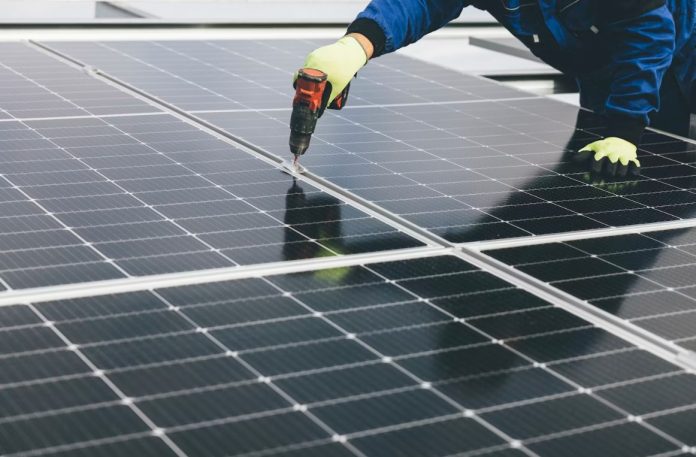
“The problem with solar rooftops is red tape. DOE should reduce the number of steps and requirements that those who want to install solar panels must go through,” Gatchalian said in a statement.

He called on the DOE, local government units and distribution utilities to standardize documentary requirements, shorten processing times and eliminate unnecessary procedures for permits and grid interconnection approvals.

Gatchalian said cumbersome approval processes continue to discourage consumers from investing in rooftop solar despite government efforts to accelerate renewable energy deployment.

He cited Pakistan’s rapid rooftop solar expansion as evidence that consumer adoption can accelerate when governments remove regulatory barriers.

“Pakistan has shown that when consumers are given a practical and affordable way to reduce electricity costs and lessen their dependence on an unreliable power grid, rooftop solar can expand rapidly,” Gatchalian said.

“The Philippines can draw lessons from this experience by making rooftop solar more accessible to households, businesses and public institutions,” he added.

The call comes as the DOE expands initiatives to promote distributed renewable energy, including its Solar Solutions for Government programme, which now covers 15 Metro Manila local government units seeking to deploy solar power and energy efficiency measures in public buildings.

Industry stakeholders have long said inconsistent permitting requirements among local governments and lengthy grid interconnection approvals remain among the biggest obstacles to wider rooftop solar adoption, despite incentives available under the country’s net-metering programme.

The Philippines is targeting renewable energy to account for 35% of its power generation mix by 2030 and 50% by 2040 as it seeks to strengthen energy security, diversify electricity sources and reduce reliance on imported fuels.

Under the Renewable Energy Act of 2008 and the government’s net-metering programme, consumers with eligible rooftop solar systems can export excess electricity to the distribution grid in exchange for credits that help offset their electricity bills.