
Home Blog Page 3

ERC receives 17 battery storage project applications as Visayas, Mindanao strengthen power grids

0

The Energy Regulatory Commission (ERC) has received 17 applications for battery energy storage system (BESS) projects across the Visayas and Mindanao as developers seek to improve grid reliability and support the integration of more renewable energy into the power system.

ERC Executive Director Nancy Aurora Q. Fajardo said the applications reflect growing demand for system flexibility as electricity consumption rises and renewable energy generation continues to expand outside Luzon.

“Today’s challenge is no longer simply supply adequacy, but system flexibility,” Fajardo said during Schneider Electric Philippines’ Innovation Day 2026 forum in Cebu.

Recent yellow and red alerts in the Visayas have underscored vulnerabilities in the power system despite generally adequate generation capacity, highlighting the need for additional reserve capacity, ancillary services, transmission upgrades and battery storage, she said.

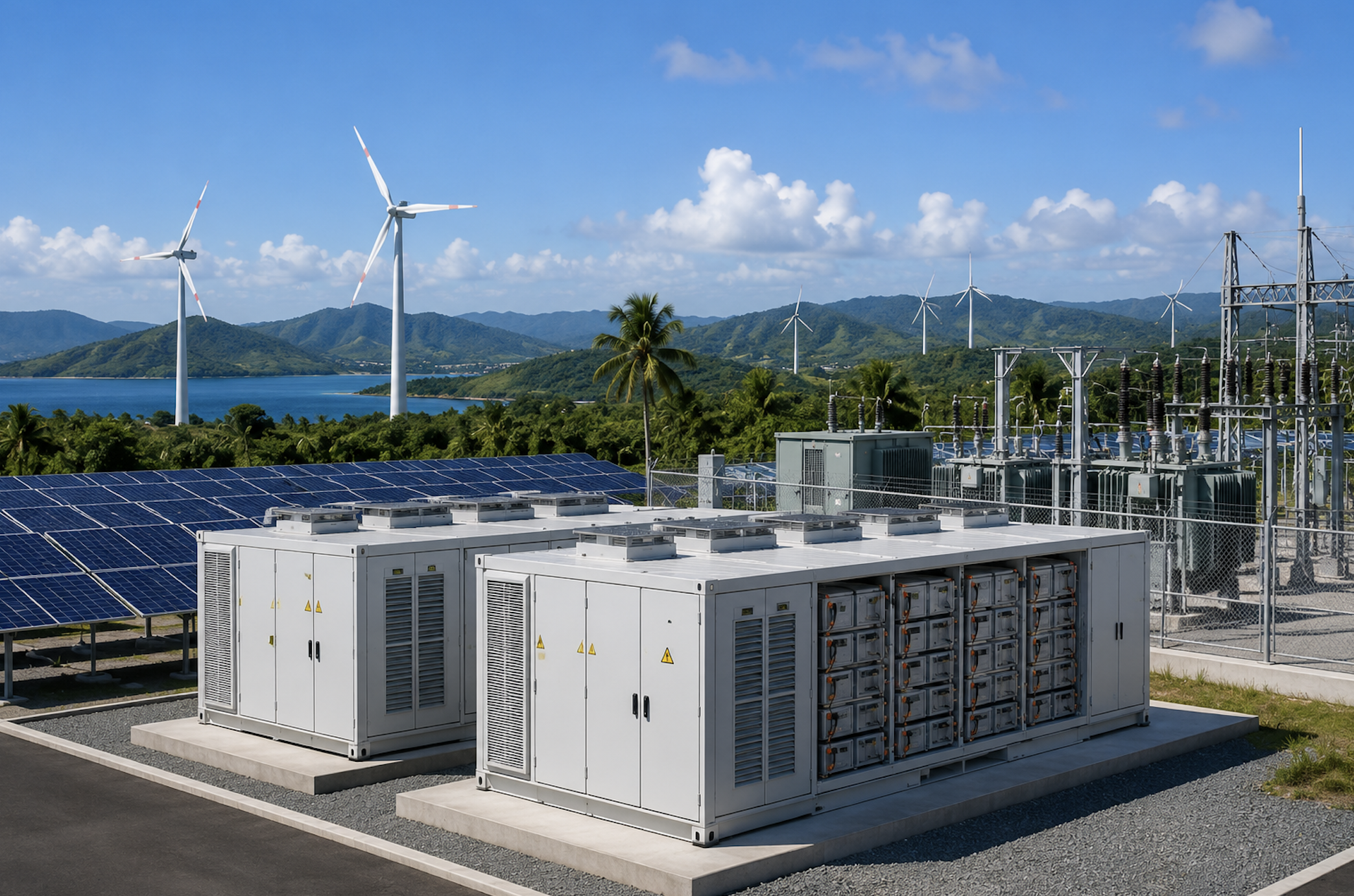
Battery energy storage systems store excess electricity generated by renewable energy facilities and release it during periods of peak demand or supply disruptions, helping stabilize grid operations.

Electricity demand is rising across the Visayas and Mindanao as industrial parks, manufacturing facilities, data centers, logistics hubs and cold-storage operations expand, increasing the need for a more resilient and flexible power system.

The ERC is supporting the deployment of battery storage alongside renewable energy projects following a Department of Energy directive requiring new variable renewable energy projects with capacities of at least 10 megawatts to install battery storage equivalent to 20% of their installed capacity.

The commission is also revising the Philippine Grid Code to accommodate inverter-based technologies, including solar, wind and battery energy storage systems, which are increasingly relied upon for frequency regulation, voltage support and other grid services.

Fajardo said storage investments are becoming more critical as transmission constraints continue to limit the efficient delivery of electricity.

“Even sufficient generation may not be fully delivered or utilized because the grid may not yet have the capacity to carry it,” she said.

To address the issue, the ERC has approved additional revenues for the National Grid Corporation of the Philippines (NGCP) to finance grid modernization projects and transmission upgrades.

The regulator has also allowed private entities other than NGCP to finance and construct selected transmission facilities, a move intended to accelerate critical infrastructure projects and reduce delays.

As more renewable energy projects come online in the Visayas and Mindanao, the need for battery storage is expected to grow.

Earlier this year, Filinvest Development Corp. inaugurated its first utility-scale solar power plant in Misamis Oriental, a 20.74-megawatt facility expected to generate about 30.2 million kilowatt-hours of electricity annually.

“These investments show how renewable energy can strengthen energy security, support sustainability and enhance regional competitiveness,” Fajardo said. “More importantly, they signal growing investor confidence in Mindanao’s future as a destination for industry and innovation.”

She said battery storage, transmission expansion and microgrid development will be critical to maintaining grid reliability as the Visayas and Mindanao attract more renewable energy and industrial investments in the coming years.

PEZA approves P97bn in renewable energy projects

0

The Philippine Economic Zone Authority (PEZA) has approved more than P97 billion worth of solar manufacturing and renewable energy-related projects as it steps up efforts to attract green investments and cut electricity costs in economic zones through embedded power systems.

Speaking at PhilEnergy 2026 on Wednesday, PEZA Director General Tereso Panga said the agency has approved 21 renewable energy-related projects with combined investments exceeding P97 billion. The projects are expected to generate more than 1,300 jobs.

“These milestones demonstrate that the Philippines—through our ecozones—has the right combination of policy support, investment incentives and strong public-private partnerships,” Panga said.

Panga said renewable energy remains one of the priority sectors eligible for fiscal incentives under the government’s Strategic Investment Priority Plan (SIPP), which he expects will continue to drive investments in clean energy projects.

He said incentives alone would not be enough to accelerate the country’s energy transition, stressing the need for wider deployment of renewable energy technologies.

As part of that effort, PEZA is working with Manila Electric Co. (Meralco), Upgrade Energy Philippines and the Philippine National Oil Company (PNOC) to develop embedded distributed power systems within economic zones.

The systems generate electricity within or near ecozones, reducing dependence on the national transmission grid and helping locators secure more competitive electricity rates.

Panga said the initiative aims to bring Philippine economic zones closer in energy cost competitiveness to other investment destinations in Southeast Asia.

Among the projects in the pipeline are 10-megawatt solar facilities in the Cavite and Baguio economic zones. PNOC is also collaborating with PEZA on renewable energy-powered industrial parks designed for energy-intensive industries.

Separately, PEZA is working with the International Finance Corp. to develop eco-industrial zones integrating renewable energy, embedded utilities and advanced water infrastructure.

It has also partnered with the Philippine Energy Efficiency Alliance to promote energy efficiency and conservation projects across ecozones.

To strengthen sustainability governance, PEZA is collaborating with the United Nations Development Programme to integrate environmental, social and governance (ESG) and Sustainable Development Goals (SDG) frameworks into ecozone operations.

It is also working with Japan-based sustainability technology company Zeroboard to help ecozone locators measure, manage and disclose greenhouse gas emissions.

As of May, PEZA had approved P124.84 billion worth of investments across all sectors, led by manufacturing and information technology-business process management projects.

Panga said the expanded incentives under the Strategic Investment Priority Plan are expected to sustain strong growth in renewable energy investments in the country’s economic zones.

Alternergy secures P2.4bn investment from A Brown unit for two Philippine wind projects

0

Renewable energy developer Alternergy Holdings Corp. has secured a P2.4 billion equity investment from ABC Energy Inc., the energy holding company of listed A Brown Co. Inc., to help finance two wind projects and free up capital for its expanding renewable energy pipeline.

Under the agreement, ABC Energy will acquire a 40% stake in Alternergy Tanay Wind Corp. and Alabat Wind Power Corp., the companies developing the Tanay and Alabat wind projects.

Alternergy, through Alternergy Wind Holdings Corp., will retain a 60% controlling stake in both project companies.

The investment forms part of Alternergy’s strategy of bringing in equity partners to completed or near-completed projects, allowing the company to recycle capital into new developments, including wind, solar, run-of-river hydropower and battery energy storage projects.

The companies have amended the transaction to complete the investment in two phases.

Alternergy said the first phase closed on June 24, with ABC Energy investing approximately P600 million through a combination of share subscription and share purchase.

The balance of the investment will be completed either on July 20 or within three business days after either the Tanay or Alabat wind project achieves commercial operations, at ABC Energy’s option.

Alternergy said it expects to retain majority ownership of both projects after the transaction is completed.

The deal underscores the growing use of strategic equity partnerships by Philippine renewable energy developers to finance capital-intensive projects while preserving financial capacity to pursue additional investments as the country accelerates its clean energy transition.

The transaction remains subject to regulatory review and approval, including clearance from the Philippine Competition Commission.

DOE expands rooftop solar program to 15 Metro Manila local governments

0
LGU Rooftop Solar
Artist's rendetion

Fifteen Metro Manila local government units (LGUs) have joined the Department of Energy‘s (DOE) program to install rooftop solar systems and improve energy efficiency in public buildings, expanding a government initiative aimed at reducing electricity costs and accelerating clean energy adoption.

Six additional LGUs — Caloocan, Las Piñas, Malabon, Muntinlupa, Parañaque and the Municipality of Pateros — signed a memorandum of agreement with the DOE under its Solar Solutions for Government: Energy Efficiency and Renewable Energy in Public Buildings (SSG-ERPB) initiative.

They joined the cities of Mandaluyong, Manila, Navotas, Pasay, Pasig, Quezon City, San Juan, Taguig and Valenzuela, which became the first participants in November 2025.

Under the program, participating LGUs will pursue rooftop solar photovoltaic (PV) installations, energy-efficient retrofits and other electricity-saving measures in government buildings in line with Republic Act No. 11285, or the Energy Efficiency and Conservation Act.

Energy Secretary Sharon Garin said reducing electricity consumption through energy efficiency and solar power would allow local governments to redirect savings toward essential public services.

“Every peso saved through energy efficiency and solar power is a peso that can be invested back into better public services,” Garin said in a statement.

She added that rooftop solar has become a practical tool for local governments to manage operating costs, strengthen the resilience of public facilities and prepare for rising electricity demand and climate-related challenges.

The initiative will also benefit from a recently issued Joint Memorandum Circular between the DOE, the Department of the Interior and Local Government and the Department of Public Works and Highways, which standardizes documentary requirements and processing timelines for net-metering applications.

The DOE said the measure is expected to speed up rooftop solar installations in government facilities by simplifying the approval process.

The DOE will provide technical assistance to participating LGUs during the development and implementation of energy efficiency and solar projects under the program.

Government buildings are among the largest electricity consumers in the public sector, and wider adoption of rooftop solar and energy efficiency measures is expected to reduce operating costs while supporting the Philippines’ transition to cleaner energy sources.

The DOE said the initiative is expected to help local governments lower electricity expenses while encouraging broader adoption of renewable energy technologies in public infrastructure.

Vivant acquires 200-MW Northern Samar wind project from Envision

0
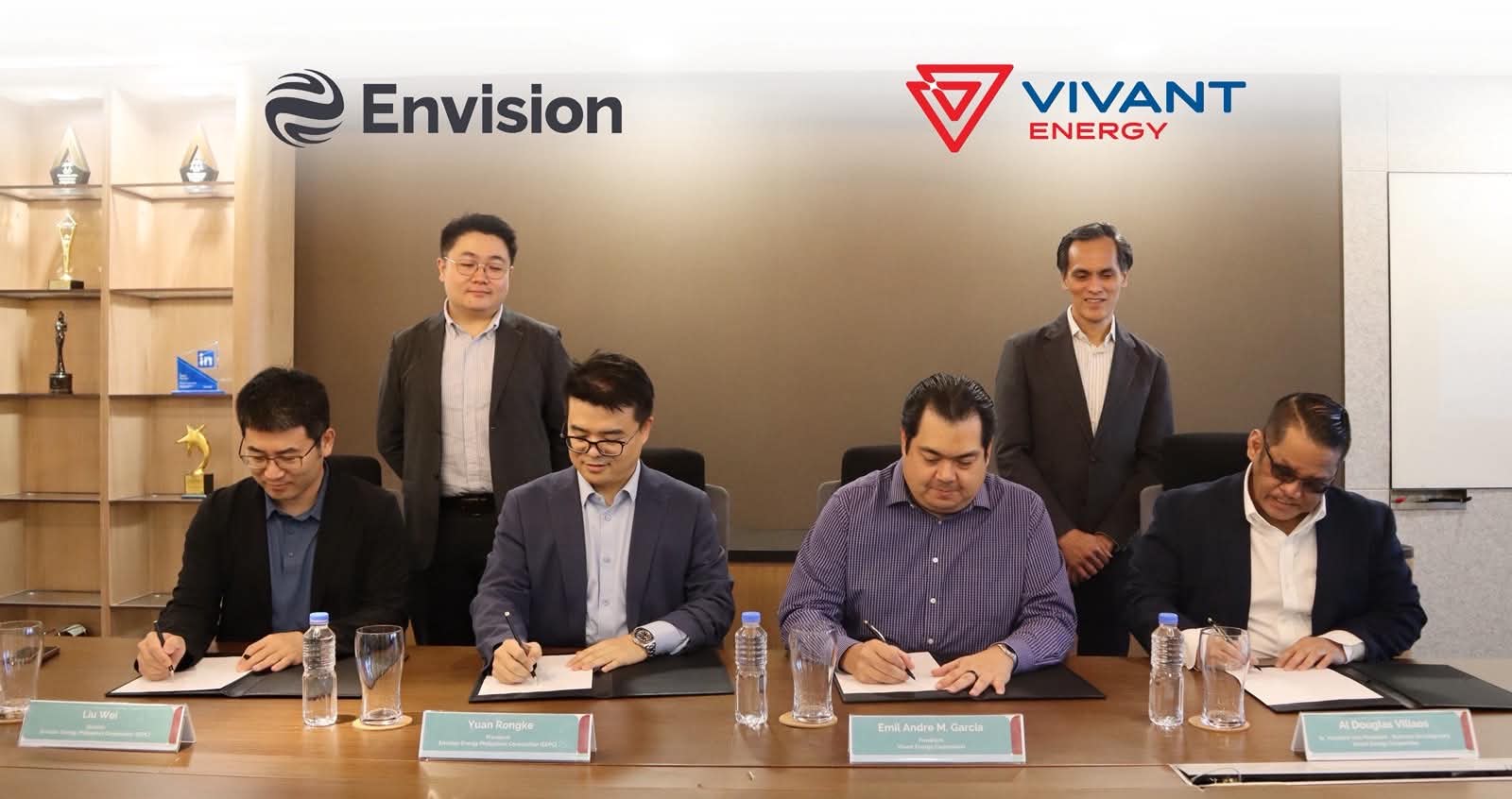
(L-R) Liu Wei, Envision Energy Philippines Director; Yuan Rongke, Envision Energy Philippines President; Emil Andre M. Garcia, Vivant Energy President and Al Douglas Villaos, Vivant Energy SAVP for Business Development. (Standing) Duli Zhang, Envision Energy Philippines Business Development Manager and Lawrence Nubla, Vivant Energy Senior Vice President for Business Development.

Vivant Energy Corp. has acquired a 200-megawatt wind power project in Northern Samar from Envision Energy Philippines, expanding its renewable energy portfolio amid growing investment in the country’s clean energy sector.

The Cebu-based energy company said its renewable energy subsidiary, Vivant Renewable Energy Corp. (VREC), acquired a 100% stake in Samar Philippines Renewable Corp. (SPRC), the developer of the proposed wind farm covering the municipalities of Lavezares, Allen, Victoria and Rosario in Northern Samar.

Financial terms of the transaction were not disclosed.

The project is targeted for completion and grid connection by the end of 2028. Once operational, it is expected to generate about 695 gigawatt-hours of electricity annually, enough to supply more than 190,000 households, according to Vivant.

The company said the facility is projected to avoid around 487,000 metric tons of carbon dioxide emissions each year.

“For an archipelagic country like the Philippines, energy security depends on a power mix that is both diverse and deliberate,” Vivant said. “In Northern Samar, Vivant Energy sees an opportunity to add greener capacity where it can support a more resilient energy portfolio and contribute to the country’s long-term energy stability.”

Thirty-six percent of the project’s capacity has secured an award under the Department of Energy’s fourth Green Energy Auction Program, while the remaining capacity is expected to be covered by an offtake agreement with a retail electricity supplier.

Envision, the project’s original developer, will continue to support its development through turbine technology, engineering services and other project development expertise as it moves toward construction and commercial operation.

The Philippines is targeting a 35% share of renewable energy in the power generation mix by 2030 and 50% by 2040, driving investment in wind, solar and energy storage projects across the country.

Renewables account for 84% of Philippines’ 26.8-GW committed power pipeline

0

Renewable energy projects account for more than four-fifths of the Philippines’ committed power generation pipeline, according to Department of Energy (DOE) data as of May 2026.

The DOE’s Annual Summary of Target Commercial Operation showed the country has 26,842 megawatts (MW) of committed power projects with target commercial operation dates through 2031 and beyond, including projects with schedules still to be determined.

Of the total, renewable energy projects account for 22,593 MW, or 84.17%, while non-renewable projects represent 4,250 MW, or 15.83%.

Solar projects dominate the committed pipeline with 16,337 MW, equivalent to 60.86% of total capacity. Wind projects follow with 5,377 MW, or 20.03%. Hydropower accounts for 834 MW, while biomass and geothermal projects contribute 39 MW and 6 MW, respectively.

The non-renewable pipeline consists mainly of coal projects at 3,074 MW and natural gas projects at 1,100 MW. Oil-fired projects account for 76 MW.

The DOE data also showed 2,979 MW of committed energy storage projects. These include 1,854 MW of standalone battery energy storage systems and 1,125 MW of integrated renewable energy and energy storage systems.

Luzon accounts for the bulk of the country’s committed power projects, with 21,325 MW in the pipeline. This includes 17,714 MW of renewable energy projects and 3,611 MW of non-renewable capacity.

In the Visayas, committed power projects total 4,193 MW, led by 3,881 MW of renewable energy capacity. Mindanao has 1,324 MW of committed power projects, including 998 MW from renewable energy sources.

For 2026 alone, 8,764 MW of committed power projects are targeted to start commercial operation, including 7,997 MW of renewable energy projects. Solar accounts for the largest share of the 2026 pipeline at 6,671 MW, followed by wind at 1,199 MW.

The figures show solar, wind and energy storage projects making up the majority of the country’s committed capacity additions as the Philippines works to expand supply and support its energy transition goals.

Philippines pushes ASEAN power grid as key to renewable energy integration

0

ASEAN energy officials reaffirmed their commitment to strengthening regional energy security and accelerating cross-border power connectivity, with the Philippines highlighting the role of regional grid integration in supporting wider renewable energy deployment across Southeast Asia.

The 44th ASEAN Senior Officials Meeting on Energy (SOME) and its associated meetings, held from June 15 to 18, brought together energy leaders from ASEAN member states, dialogue partners, and regional institutions to review progress on initiatives aimed at ensuring reliable, affordable, and sustainable energy supplies.

Among the key issues discussed was the continued development of the Enhanced ASEAN Power Grid, a regional initiative designed to improve electricity interconnection, support cross-border power trade, and help integrate renewable energy resources across ASEAN power systems.

The ASEAN Power Grid aims to connect electricity networks across Southeast Asia, allowing member states to trade power and improve system reliability.

The initiative is also seen as a key enabler for renewable energy integration by allowing countries to share surplus electricity generated from sources such as solar, wind, and hydropower.

Officials also reviewed the implementation of the ASEAN Framework Agreement on Petroleum Security, which seeks to strengthen emergency preparedness and safeguard energy supplies during disruptions.

Department of Energy Undersecretary Felix William B. Fuentebella, who chaired the meetings in his capacity as ASEAN Senior Officials Meeting on Energy chair, said closer cooperation would be critical as ASEAN economies face rising energy demand and external supply risks.

“As ASEAN’s demand for energy continues to grow and external risks evolve, we must work together to strengthen resilience, diversify supply, accelerate interconnection, and deepen partnerships that will secure our common energy future,” Fuentebella said.

The discussions come as Southeast Asian economies seek to balance growing power requirements with efforts to accelerate the energy transition.

Greater regional interconnection is expected to help improve grid reliability, reduce supply risks, and support the wider use of renewable energy in the region.

Officials also assessed progress on ASEAN’s broader energy cooperation agenda, emphasizing the need to translate regional commitments into concrete actions through timely implementation of national and regional programs.

The Philippines, which serves as ASEAN Chair for Energy Cooperation in 2026, reported that all eight of its Energy Sector Annual Priorities, as well as its Priority Economic Deliverable for the energy sector, remain on track.

Fuentebella said ASEAN’s energy transition must proceed in a way that supports economic growth while maintaining affordability and supply security.

“Energy security remains a fundamental pillar of ASEAN’s economic resilience and competitiveness. Our collective efforts must continue to focus on practical, implementation-oriented cooperation that delivers tangible benefits to our peoples and economies,” he said.

The Philippines is expected to host the 44th ASEAN Ministers on Energy Meeting in Manila in October, where member states will review progress on regional initiatives aimed at enhancing energy security, strengthening resilience, and supporting a secure, accessible, affordable, and sustainable energy future.

DOE seeks input on tender rules for new nuclear power plants in the Philippines

0
Artist's rendetion.

The Department of Energy (DOE) has opened for public comment a proposed framework that will govern the tender of nuclear power generation capacity, including the procurement process for new nuclear power plants in the Philippines.

In a notice, the DOE invited interested parties to submit comments and recommendations on the proposed Department Circular titled “Guidelines for the Conduct of the Nuclear Power Generation Capacity Tender for the Nuclear Power Plant and Succeeding Nuclear Power Plants.”

The agency said comments should be submitted using a prescribed template and addressed to Energy Utilization Management Bureau Director Patrick T. Aquino. Stakeholders have until June 30, 2026 to submit their recommendations.

The proposed circular marks another step in the government’s efforts to establish the regulatory and commercial framework needed to introduce commercially operating nuclear power into the country’s power mix.

The circular will cover the conduct of the Nuclear Power Generation Capacity Tender, which will apply to new nuclear power projects and future nuclear facilities in the Philippines.

The Philippines is exploring nuclear energy as part of its long-term strategy to strengthen energy security, diversify power sources, and reduce dependence on imported fossil fuels.

The government has been laying the groundwork for a potential nuclear power program through policy development, capacity building and cooperation with international partners.

The country previously built the Bataan Nuclear Power Plant in Morong, Bataan, but the facility never operated commercially.

The DOE has previously said nuclear energy could play a role in meeting the country’s growing electricity demand while supporting efforts to build a low-carbon and more resilient energy system.

President Ferdinand Marcos Jr. has backed the development of a civilian nuclear energy program, while the government continues to work with international organizations and partner countries on regulatory readiness, safety standards and workforce development.

The latest consultation comes as the DOE advances preparations for the potential deployment of nuclear power technologies in the Philippines, including both conventional nuclear plants and emerging small modular reactor technologies.

Jollibee powers Cebu commissary with 99% renewable energy through First Gen partnership

0
Jollibee First Gen

Jollibee Foods Corp. said its largest production facility in the Visayas-Mindanao region is now running on electricity sourced 99% from renewable energy under a partnership with First Gen Corp., as the restaurant giant expands efforts to reduce emissions across its manufacturing operations.

The Danao commissary in Cebu combines rooftop solar power and geothermal energy, helping reduce greenhouse gas emissions by more than 70%, according to the statement.

The facility sources part of its electricity requirements from a rooftop solar system installed and operated by First Gen, while also receiving geothermal power through a direct supply arrangement with the Lopez-led energy company.

The Danao commissary, inaugurated in January 2026, serves as a production hub for several Jollibee Group brands in the Visayas and Mindanao, including Jollibee, Chowking, Mang Inasal, Red Ribbon, and Burger King.

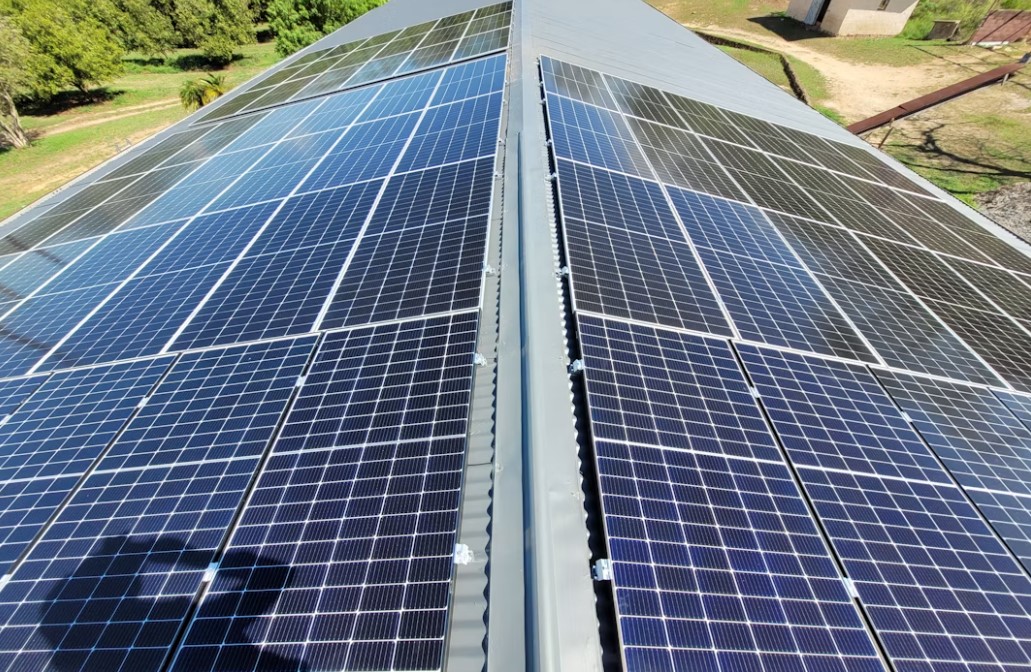
The site has more than 3,900 rooftop solar photovoltaic panels with a total capacity of 2.8 megawatt-peak. It also receives 1,000 kilowatts of geothermal energy from First Gen’s Bac-Man geothermal power plant.

The project highlights growing interest among Philippine manufacturers in renewable energy solutions that can lower emissions, improve operational resilience and reduce exposure to fossil fuel price volatility.

The Danao rooftop solar project was fully operational before the site’s official inauguration. Jollibee said the project forms part of its Joy for Tomorrow global sustainability agenda, which covers energy and water consumption, waste reduction and recycling across its manufacturing and logistics operations.

Mark Malabanan, vice president and head of solar and commercial business development at First Gen Energy Solutions, said the Danao solar installation was among the fastest in the industry, with preparation work starting in September 2025 and initial energization completed by mid-January 2026.

The Cebu project builds on an earlier partnership between Jollibee and First Gen. In 2023, Jollibee tapped First Gen to install 17,000 solar panels with more than 9 megawatts of capacity at commissaries and distribution sites in Parañaque and Laguna. Those projects were completed in 2024.

First Gen also supplies Jollibee Group with a total of 11 megawatts of electricity for its manufacturing and logistics hubs nationwide.

First Gen has been expanding its renewable energy supply arrangements with corporate customers as more industrial users seek cleaner power sources and more stable electricity costs.

SunAsia, VinEnergo to invest $416 million in 422-MWp floating solar projects

0
Floating solar
Photo by Fatih PAÇ on Unsplash.

Philippine renewable energy developer SunAsia Energy has partnered with Vietnam’s VinEnergo to develop three floating solar projects worth $416 million, adding 422 megawatt-peak (MWp) of renewable energy capacity to the country’s growing clean energy pipeline.

The projects, located in Pampanga and Negros Occidental, are expected to be among the first large-scale pile-mounted solar-on-water developments in the Philippines and form part of the government’s broader push to increase the share of renewable energy in the power generation mix to 35% by 2030 and 50% by 2040.

SunAsia Chief Executive Officer Maria Theresa Cruz-Capellan said the three projects have secured contracts under the fourth Green Energy Auction (GEA-4) program.

One of the projects is scheduled to begin commercial operations in May 2027, while the remaining two are expected to come online in 2028.

The developments will involve the installation of nearly 700,000 solar panels mounted on concrete pile structures above water areas, allowing aquaculture and fishpond activities to continue beneath and around the facilities.

Electricity generated by the projects will be delivered to the grid through approximately 62 kilometers of new transmission lines connecting the facilities in Pampanga and Negros Occidental.

Capellan said the projects will be financed through a combination of equity and debt, with VinEnergo taking a larger share of the investment while SunAsia retains majority ownership.

“We are still the majority. But in terms of sharing of investment, they’re the majority,” Capellan said.

She said VinEnergo was attracted by SunAsia’s experience in developing large-scale floating solar facilities in the Philippines.

The partnership builds on SunAsia’s growing presence in the floating solar sector. The company is jointly developing a 1.3-gigawatt floating solar project in Laguna Lake with Singapore-based Blueleaf Energy, which is backed by Macquarie’s Green Investment Group.

Valued at more than $1.2 billion, the Laguna Lake development is expected to become one of the world’s largest floating solar projects once completed.

SunAsia has also secured the largest allocation of floating solar projects awarded under GEA-4, with 13 projects totaling 949 MW of capacity.

Capellan said the collaboration highlights the potential of combining renewable energy generation with aquaculture activities.

“Vietnam is one of the world’s leading shrimp exporters, while the Philippines has a strong history in shrimp production. By bringing together the experience, technology, and commitment of both countries, this partnership presents a compelling case for integrated solar-aquaculture farming from both a farm productivity and energy cost perspective,” she said.

The companies said the projects are designed to maximize the productive use of water-based areas while generating clean electricity and supporting local economic activity.