
Home Blog Page 4

ERC rules aim to ease grid bottlenecks for renewable energy projects

0
ERC NGCP

The Energy Regulatory Commission (ERC) has adopted new rules allowing entities other than the National Grid Corporation of the Philippines (NGCP) to finance and construct certain transmission facilities, a move aimed at accelerating the integration of renewable energy projects and other new power plants into the national grid.

The rules, contained in ERC Resolution No. 18, Series of 2026, establish the implementing framework for the development, ownership and operation of point-to-point limited transmission facilities, as well as the financing and construction of transmission projects by entities other than the country’s transmission network provider.

The ERC said the measure is designed to address transmission infrastructure delays that have slowed the connection of new generation facilities to the grid, including renewable energy projects that require new transmission lines and substations before they can deliver electricity to consumers.

Under the framework, qualified generation companies may finance and construct Associated Transmission Projects (ATPs) identified by the Department of Energy (DOE). These projects include transmission facilities directly linked to new power plants and needed to connect them to the grid.

Meanwhile, the National Transmission Corporation (TRANSCO) may undertake Priority Projects or engage government agencies, government-owned and controlled corporations, and private entities to construct such projects on its behalf pursuant to DOE Circular No. DC 2026-02-0007.

The projects covered by the rules include new transmission lines, substations, switchyards and other facilities needed to accommodate additional generation capacity and strengthen the country’s transmission network.

“Reliable and adequate transmission infrastructure is essential to ensuring that electricity generated by new power plants actually reaches Filipino homes and businesses,” ERC Chairperson and Chief Executive Officer Francis Saturnino C. Juan said.

Juan said the implementing rules provide a clear regulatory pathway for critical transmission projects to be completed more quickly while maintaining transparency, accountability and consumer protection.

“For consumers, this means helping bring more power supply into the grid, reducing bottlenecks, supporting the integration of renewable energy, and ultimately contributing to a more secure, reliable and affordable electricity system,” he said.

The Philippines is seeking to accelerate renewable energy development as it works toward increasing the share of renewables in the power generation mix.

However, industry stakeholders have repeatedly identified transmission constraints as one of the biggest challenges facing the sector, with several projects requiring new grid infrastructure before reaching commercial operation.

The ERC said the new rules also establish terms governing project approvals, construction timelines, facility turnover to the transmission network provider and the recovery of project costs.

The regulator will retain authority to review the prudency of project expenditures and determine the fair and reasonable value of transmission projects before allowing any cost recovery mechanism.

According to the ERC, the measure supports broader government efforts to strengthen energy security, accelerate the country’s energy transition and ensure the timely integration of new generation capacity needed to meet rising electricity demand.

DOE seeks feedback on EV charging rules as Philippines prepares for cleaner transport future

0

The Department of Energy (DOE) is seeking industry feedback on proposed rules to streamline the permitting and installation of electric vehicle (EV) charging stations, as the Philippines accelerates efforts to build the infrastructure needed to support cleaner transport and rising electricity demand.

The DOE is holding a third round of consultations on the proposed framework, which aims to simplify permitting procedures for charging station developers and implement installation requirements under the Electric Vehicle Industry Development Act (EVIDA).

The move comes as the government pushes to expand the country’s EV ecosystem and develop the charging infrastructure needed to support wider adoption of electric vehicles, a key component of efforts to reduce greenhouse gas emissions from the transport sector.

Industry participants have identified charging infrastructure as one of the biggest challenges to EV adoption, alongside vehicle affordability and consumer awareness.

The proposed rules are expected to provide clearer guidelines for the installation of charging facilities in commercial establishments, buildings and other locations covered by EVIDA, while helping reduce administrative bottlenecks faced by charging station developers.

The expansion of EV charging infrastructure is also expected to create new opportunities for power distributors, renewable energy developers and operators of solar-powered charging facilities as demand for electricity from the transport sector increases.

The growth of electric mobility could contribute to higher electricity consumption in the coming years, reinforcing the need for additional generation capacity, grid upgrades and energy storage systems to support future charging networks.

The development underscores the growing convergence between the power and transport sectors, with policymakers viewing electric mobility as an important pillar of the country’s broader energy transition strategy.

Under EVIDA, certain buildings and parking facilities are required to allocate dedicated parking spaces for electric vehicles and install charging stations, while government agencies are tasked with supporting the development of a nationwide charging network.

The DOE said the latest consultation would allow local government units, utilities, charging operators, property developers and other stakeholders to submit comments before the rules are finalized.

The Philippines has been ramping up efforts to promote cleaner energy use and reduce dependence on imported fuels, with the government seeking to increase the share of renewable energy in the power generation mix while encouraging the adoption of low-carbon transport technologies.

Natural gas auction rules to complement renewable energy growth, DOE says

0

The Department of Energy (DOE) has issued rules governing the conduct of a mid-merit natural gas capacity auction, as the Philippines seeks to strengthen energy security and support the integration of renewable energy into the country’s power system.

Under Department Circular No. DC2026-06-0013, signed by Energy Secretary Sharon Garin and seen by Renewable Energy Philippines, the DOE prescribed the policy framework and implementing guidelines for the Mid-Merit Natural Gas Capacity Auction (MMNGCA), a mechanism designed to procure additional natural gas-fired generating capacity through a competitive process.

The department said the policy is intended to “provide a transparent, competitive and reliable mechanism for the procurement of mid-merit natural gas-fired power generation capacity” and promote investments in natural gas infrastructure while ensuring adequate electricity supply.

The circular forms part of the government’s broader energy transition strategy, under which natural gas has been identified as a transition fuel that can complement the increasing share of variable renewable energy sources such as solar and wind.

According to the DOE, the policy seeks to ensure the “availability of adequate, reliable, and affordable power supply” while facilitating the development of the country’s natural gas industry.

The department has previously said that indigenous and imported natural gas will play an important role in the country’s energy mix, particularly as the Philippines works toward achieving a renewable energy share of 35% by 2030 and 50% by 2040.

Mid-merit generating plants generally operate during periods of intermediate electricity demand and provide operational flexibility to the grid by adjusting output in response to changing supply and demand conditions.

Such flexibility is increasingly viewed as important as more intermittent renewable energy projects are connected to the transmission system.

The circular provides the framework for the conduct of the auction and outlines the responsibilities of various government agencies and participating entities involved in the procurement process.

The DOE said the auction mechanism aims to encourage investments in natural gas-fired power generation through a competitive and transparent market-based approach.

The policy is also intended to support the implementation of the Philippine Natural Gas Industry Development Plan, which seeks to establish a sustainable and competitive natural gas industry capable of enhancing the country’s energy security and economic growth.

The department noted that the development of natural gas resources and infrastructure is expected to contribute to a more diversified energy portfolio while supporting the country’s transition toward a lower-carbon energy system.

The issuance of the circular comes as the Philippines continues to expand renewable energy capacity through the Green Energy Auction Program and other policy initiatives designed to accelerate investments in solar, wind, hydro and geothermal projects.

As renewable energy penetration increases, policymakers have identified the need for flexible and dispatchable generation resources that can help balance fluctuations in power supply and maintain grid stability.

The DOE has described natural gas as a transition fuel that can provide such balancing capability while supporting the country’s broader decarbonization objectives.

The circular takes effect following its publication and provides the regulatory framework for the conduct of future Mid-Merit Natural Gas Capacity Auctions, which the DOE expects will contribute to a secure, reliable and resilient energy system while complementing the growth of renewable energy in the Philippines.

Novva enters Philippines with acquisition of 120-MW Bukidnon solar project

0
Novva Group
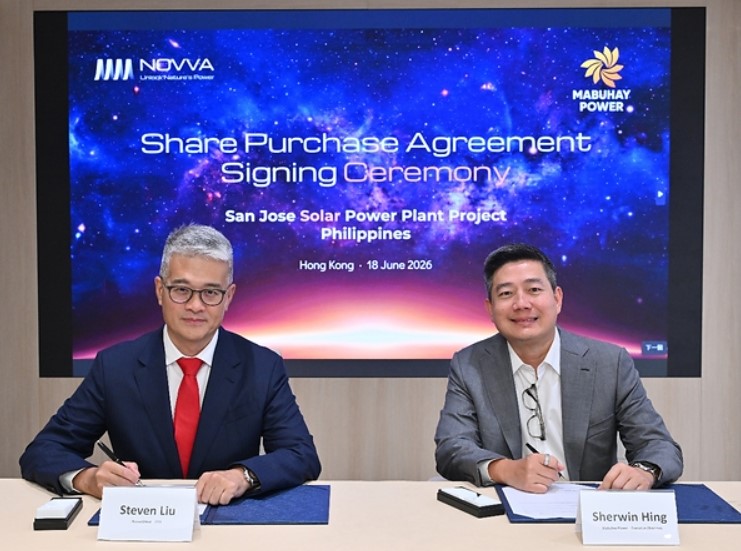
NOVVA Group CEO Steven Liu (left) and Mabuhay Power Holdings Corporation Chairman Sherwin Hing (right) sign the agreement for SJSP.

Singapore-based Novva Group has agreed to acquire the 120-megawatt (MW) San Jose Solar Power Plant in Bukidnon from Mabuhay Power Holdings Corporation, marking the energy infrastructure firm’s first investment in the Philippines as it expands its renewable energy platform across Southeast Asia.

The greenfield solar photovoltaic project, located in Barangay San Jose in the municipality of Quezon, Bukidnon, is expected to generate more than 200 gigawatt-hours of clean electricity annually once operational. Construction is scheduled to begin in the first quarter of 2027, with commercial operations targeted for 2028.

The Philippines is seeking to increase the share of renewable energy in its power generation mix to 35% by 2030 and 50% by 2040, with the government encouraging greater private and foreign investment in the sector to strengthen energy security and support economic growth.

The investment comes as electricity demand across Asia is expected to rise alongside the expansion of data centres, cloud computing and artificial intelligence applications, increasing the need for new power generation capacity.

Novva said the Bukidnon project would become part of its regional energy platform, which combines renewable generation, battery energy storage, grid connectivity and infrastructure financing to support long-term electricity demand across Southeast Asia.

“Power availability has become one of the defining constraints on future growth,” Novva founder and chief executive Steven Liu said in a statement.

“With SJSP, we are securing the strategic infrastructure needed to support the next wave of industrial and digital development. By combining disciplined execution with long-term partnerships, Novva is building a reliable clean energy foundation to power the future of Southeast Asia,” Liu added.

The project is expected to contribute to the Philippines’ renewable energy ambitions while adding clean power capacity to Mindanao, where electricity demand continues to grow alongside industrial and digital development.

Novva said the Bukidnon acquisition forms part of its broader strategy to build renewable energy infrastructure across Southeast Asia and Latin America to meet rising long-term electricity demand.

PH-listed ACEN to sell up to 49% stake in India solar project to Diamond India Renewables

0

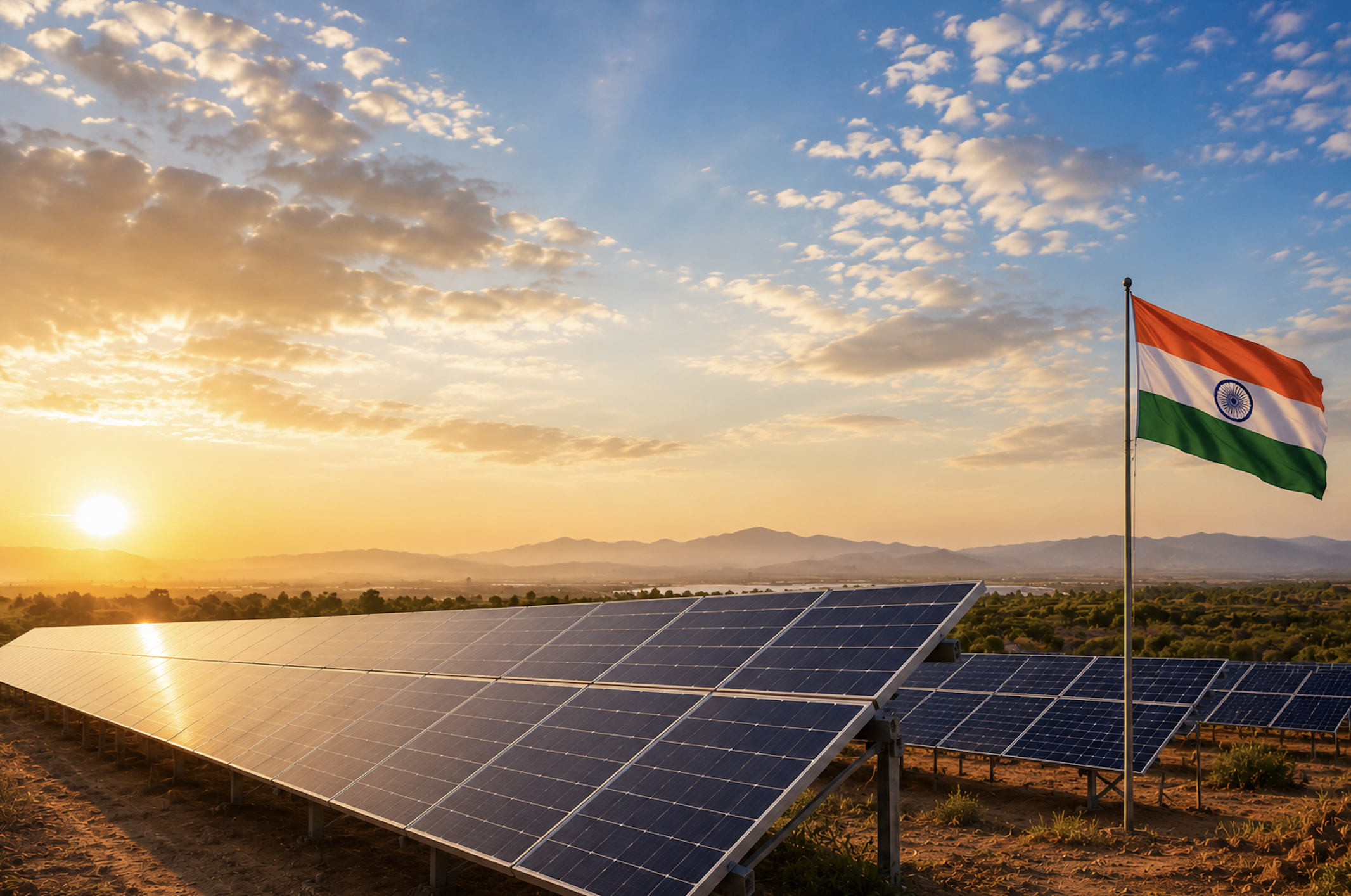
Philippine-listed ACEN Corp said it has agreed to sell up to a 49% stake in an Indian solar project to Diamond India Renewables One B.V., as the Ayala-led energy company continues to bring in partners to fund the expansion of its renewable energy portfolio.

ACEN said in a stock exchange filing that its subsidiary Unlimited Renewables Holdings B.V. and Amsa Solar Holdco Pte. Ltd., an entity under ACEN’s joint venture with UPC Renewables for India projects, executed a Securities Subscription and Purchase Agreement and a Shareholders’ Agreement with Diamond India Renewables One B.V. for the transaction.

The deal involves the acquisition by Diamond India Renewables of up to a 49% interest in Tejorupa Renewables India Project Private Ltd., which is developing a 250-megawatt alternating current solar power project in Rajasthan, India.

The transaction will be completed in stages, with the investor initially acquiring a 10% voting interest in Tejorupa, ACEN said. Financial terms of the deal were not disclosed.

The closing of the transaction remains subject to agreed contractual and customary conditions precedent, according to the filing.

The transaction is the latest in ACEN’s strategy of partnering with long-term investors to recycle capital and support the development of its renewable energy pipeline across Asia-Pacific markets.

India has emerged as one of ACEN’s priority overseas growth markets through its partnership with UPC Renewables, with the company investing in utility-scale solar and wind projects to tap the country’s rapidly growing demand for clean energy.

ACEN, the listed energy platform of the Ayala group, has been expanding its renewable energy portfolio in the Philippines and overseas as it works toward its target of building one of the region’s largest clean energy platforms.

Congress study says Philippines needs investments to manage renewable energy transition costs

0

The Philippines will need to mobilize significant investments in renewable energy, grid integration and supporting infrastructure as it seeks to decarbonize its power sector while balancing energy security, affordability and sustainability, according to a policy paper by Congress’ research arm.

The Congressional Policy and Budget Research Department (CPBRD), in a discussion paper titled Renewable Energy Transition and the Costs of Decarbonization in the Philippines, said the country faces the challenge of pursuing a low-carbon energy transition despite contributing negligibly to global greenhouse gas emissions.

The paper said decarbonization in the Philippines requires a shift toward cleaner energy sources, particularly renewable energy, but the transition entails costs that need to be carefully managed.

“The transition to renewable energy entails significant upfront costs,” the report said, citing the need for investments in renewable energy generation, transmission networks, grid flexibility and energy storage systems.

The study comes as the Philippines targets increasing the share of renewable energy in the power generation mix to 35% by 2030 and 50% by 2040.

According to the CPBRD, the country’s energy transition must address the “energy trilemma” of affordability, reliability and sustainability while supporting economic growth.

The paper said the Philippines remains vulnerable to global fuel price volatility and fuel supply disruptions because of its dependence on imported fossil fuels.

Developing indigenous renewable energy resources such as solar, wind, hydropower, geothermal and biomass could help reduce that exposure and strengthen energy security, it said.

However, the report said expanding renewable energy capacity alone would not be sufficient.

“The integration of variable renewable energy sources requires investments in transmission networks, grid flexibility and energy storage systems,” it said.

The CPBRD said supportive policies would be needed to mobilize private sector investments, reduce risks and address barriers to renewable energy development.

These include maintaining a stable regulatory environment, improving access to financing, streamlining permitting processes and strengthening policy implementation.

The paper also highlighted the need for a “just transition,” saying the shift away from fossil fuels should take into account the social and economic impacts on affected workers and communities.

It said renewable energy development could generate national benefits, including reduced local air pollution, lower greenhouse gas emissions, new investments, technological innovation and job creation.

The findings come as the Philippines ramps up renewable energy development through the Green Energy Auction Program, foreign ownership liberalization in the renewable energy sector and initiatives designed to speed up strategic investments.

The CPBRD said careful policy planning and sustained investment would be needed to ensure that decarbonization supports energy security, economic resilience and long-term sustainability.

For the Philippines, the report said the renewable energy transition is not only an environmental objective but also part of a broader strategy to build a more secure, affordable and resilient energy system.

Philippines, Germany pledge deeper renewable energy partnership

0
Philippines Germany Renewable Energy Deal
President Ferdinand R. Marcos Jr. and German President Frank-Walter Steinmeier reaffirm stronger Philippines-Germany cooperation in trade, defense, and renewable energy during a bilateral meeting at Malacañan Palace in Manila on Tuesday (June 16, 2026). Photo: PCO

The Philippines and Germany pledged to deepen cooperation in renewable energy, with President Ferdinand R. Marcos Jr. on Tuesday highlighting German technology and investment as important to the country’s clean energy transition.

Speaking after bilateral talks with German President Frank-Walter Steinmeier at Malacañang Palace, Marcos said the two countries share ambitions in renewable energy and are well positioned to work together by combining Germany’s technological expertise with the Philippines’ abundant natural resources.

“We share ambitions in renewable energy collaboration, leveraging Germany’s technology and the Philippines’ natural resources, making us natural partners in this sector,” Marcos said in a joint statement.

The renewed commitment comes as the Philippines ramps up efforts to expand clean energy capacity and attract foreign investment into the sector.

The government aims to increase the share of renewable energy in the country’s power generation mix to 35% by 2030 and 50% by 2040, while policy reforms allowing up to 100% foreign ownership of renewable energy projects have opened new opportunities for international investors.

The Philippines has also been actively courting European investment in renewable energy as it seeks to reduce its reliance on imported fossil fuels and strengthen energy security amid rising electricity demand.

Germany is regarded as one of the world’s leaders in renewable energy development through its Energiewende, or energy transition strategy, with expertise spanning offshore wind, solar power, battery storage, green hydrogen and power grid technologies.

The Philippines has been pursuing similar priorities, including the development of offshore wind projects, utility-scale solar farms, energy storage systems and modern transmission infrastructure needed to integrate more renewable power into the national grid.

“Our relations with Germany are important not just because our portfolio of cooperation spans a wide array of sectors, but because these partnerships and projects have proven to be successful and beneficial to our national development efforts,” Marcos said.

The two leaders discussed broader cooperation covering trade and investment, climate change, economic development and labour, with renewable energy identified as one of the priority areas for future collaboration.

Germany has also supported Philippine development initiatives through the German Agency for International Cooperation (GIZ), including programmes focused on climate resilience, sustainable development, technical training and capacity building.

Beyond energy cooperation, Marcos described Germany as the Philippines’ largest trading and investment partner within the European Union, with bilateral trade reaching around $5.5 billion and net foreign direct investments amounting to $10.26 million in 2025.

German companies including Siemens, Lufthansa Technik, Deutsche Bank, Bayer and Bosch have established operations in the Philippines, contributing to economic growth and technology transfer.

Marcos also welcomed Germany’s support for the swift conclusion of a free trade agreement between the Philippines and the European Union, with the sixth round of negotiations held in Manila in May.

The two countries likewise reaffirmed their commitment to a rules-based international order and discussed regional and global security issues, including developments in the Indo-Pacific.

Steinmeier said his state visit underscored Germany’s commitment to strengthening ties with the Philippines as a like-minded partner.

“Our cooperation is not only marked by international and regional developments. Our peoples too, continue to grow together,” Steinmeier said.

The German president also highlighted the contributions of around 45,000 Filipinos living and working in Germany, many of whom are employed in healthcare and other skilled professions.

The renewed commitment comes as the Philippines seeks to attract more foreign participation in renewable energy projects following policy reforms that opened the sector to full foreign ownership.

European partners, including Germany, are expected to play an increasing role in areas such as offshore wind, solar power, battery storage, grid modernisation and other clean energy technologies.

PNB backs 82-MWp Isabela solar project with P3bn financing

0
Artist's rendition.

Philippine National Bank (PNB) has approved a P3-billion project finance facility for the construction of an 82-megawatt-peak (MWp) solar power plant in Isabela province awarded under the government’s Green Energy Auction Program.

The financing was extended to Linglingay Power Corp., a wholly owned subsidiary of Hexa Philippines Holdings, Inc., for a ground-mounted solar power plant scheduled to begin commercial operations by December.

The project was awarded under the Department of Energy’s Green Energy Auction Program Round 2, which seeks to accelerate renewable energy investments through competitive bidding.

Once operational, the facility is expected to generate enough electricity to supply around 25,000 to 35,000 Filipino households annually while helping reduce carbon emissions.

“This partnership reflects PNB’s vision of powering a cleaner, more sustainable future,” PNB President and Chief Executive Officer Edwin R. Bautista said in a statement.

Hexa Philippines Managing Director Christopher Chua said the financing marks another milestone for the company’s expansion plans.

Chua said Hexa is advancing nearly 600 MWp of solar capacity across its operating and under-construction portfolio and aims to exceed 1 gigawatt-peak (GWp) of installed capacity in the Philippines.

The financing underscores the growing role of domestic banks in supporting the country’s energy transition as developers seek capital to build renewable energy projects awarded under government programmes.

The project adds to a growing pipeline of utility-scale solar developments under the Green Energy Auction Program, as the Philippines seeks to attract private investment to meet rising electricity demand and expand its renewable energy capacity.

Norwegian firms eye opportunities in Philippine offshore wind sector

0

Norwegian offshore wind and maritime companies are eyeing opportunities in the Philippines, holding talks with government officials and industry players as the country seeks foreign expertise to help build its emerging offshore wind industry.

A 10-company Norwegian delegation met with officials from the Department of Energy (DOE), including Energy Secretary Sharon Garin and senior department officials, to discuss how Norway’s decades of experience in offshore energy could support the Philippines’ renewable energy ambitions.

The Philippines sees offshore wind as a key part of its energy transition and efforts to improve energy security, although the sector will require substantial investments in ports, transmission infrastructure, marine logistics and specialized services.

The Norwegian mission also participated in an industry forum at the headquarters of the Asian Development Bank titled “Accelerating Offshore Wind in the Philippines: Policy, Innovation, and Supply Chain Readiness,” held alongside the Asia Clean Energy Forum.

Organized by the Royal Norwegian Embassy in Manila, Norwegian Energy Partners (NORWEP), the DOE, the Global Wind Energy Council and the Global Offshore Wind Alliance, the event brought together more than 200 representatives from government, developers, financiers, marine logistics firms and global supply chain companies.

Discussions focused on the infrastructure and technical requirements needed to support offshore wind projects, including port development, offshore grid connections, marine transport, safety standards and workforce training.

The Norwegian delegation also engaged with offshore wind developers operating in the Philippines, including Copenhagen Offshore Partners, Triconti ECC Renewables, Nexif Ratch Energy, and ACEN, to discuss supply chain readiness and maritime logistics.

Participating Norwegian companies included DNV, Fred. Olsen Windcarrier, Fred. Olsen 1848, Glamox, the Norwegian Geotechnical Institute, Reach Subsea, Øglænd System Group and Jorn Energy Corporation.

The Philippines has identified offshore wind as a key component of its long-term energy transition strategy, with the government seeking to attract investments and develop the regulatory and technical capabilities needed to support large-scale projects.

The mission highlights growing international interest in the Philippine offshore wind market, where foreign developers, technology providers and maritime service companies are positioning for projects expected to attract billions of dollars in investment over the coming years.

Renewable energy dominates Philippine Green Lane approvals with P344.6B pipeline

0
REPower Matabas
Photo by Zbynek Burival on Unsplash.

Philippine renewable energy projects worth P344.62 billion secured certification under the government’s Green Lane initiative in the first five months of 2026, accounting for nearly all strategic investments approved during the period as the country accelerates its clean energy transition.

The Department of Energy (DOE) said 13 renewable energy projects were certified under the expedited permitting programme from January to May, representing 99.6% of the P346 billion in total Green Lane investments approved during the period. The projects are expected to generate 38,716 direct jobs.

The Green Lane initiative, established under Executive Order No. 18 in 2023, was designed to speed up the processing of permits and licenses for strategically important investments.

The programme created a One-Stop Action Center for Strategic Investments under the Board of Investments and required government agencies and local government units to establish dedicated “green lanes” to streamline approvals for qualified projects.

Energy Secretary Sharon Garin said the latest approvals reflect growing investor confidence in the country’s renewable energy sector and the government’s efforts to reduce regulatory bottlenecks.

“The P344.62 billion that investors are committing to renewable energy under the Green Lane is proof that the Philippines is a destination for clean energy business, and that Filipino workers will be the first to benefit,” Garin said in a statement.

The DOE said the projects, which include solar, wind, hydro and geothermal developments, would help meet rising electricity demand while supporting the country’s energy transition goals.

The Philippines aims to increase the share of renewable energy in its power generation mix to 35% by 2030 and 50% by 2040 as it seeks to strengthen energy security and reduce dependence on imported fossil fuels.

Executive Order No. 18 identifies clean energy as one of the priority sectors eligible for Green Lane treatment, alongside other strategic industries intended to attract significant domestic and foreign investments and support the country’s long-term economic development.

Since the Green Lane programme took effect in February 2023, the Board of Investments has certified 237 strategic investment projects worth P6.32 trillion that are projected to create more than 420,000 jobs, according to the DOE.

Renewable energy has accounted for the largest share of those approvals, with 182 projects valued at P5.41 trillion certified to date, underscoring the sector’s growing role in the country’s investment pipeline.

The DOE attributed the steady flow of renewable energy investments to streamlined regulatory processes and policy reforms aimed at encouraging private sector participation in the energy transition.

The agency said it would continue working with government agencies, local government units and industry stakeholders to help certified projects move from development to commercial operation.

The latest Green Lane approvals highlight the increasing role of renewable energy in the Philippines’ investment agenda as the country seeks to expand power generation capacity, create jobs and attract long-term capital into the energy sector.